The short answer: Earth's atmosphere makes stars shimmer
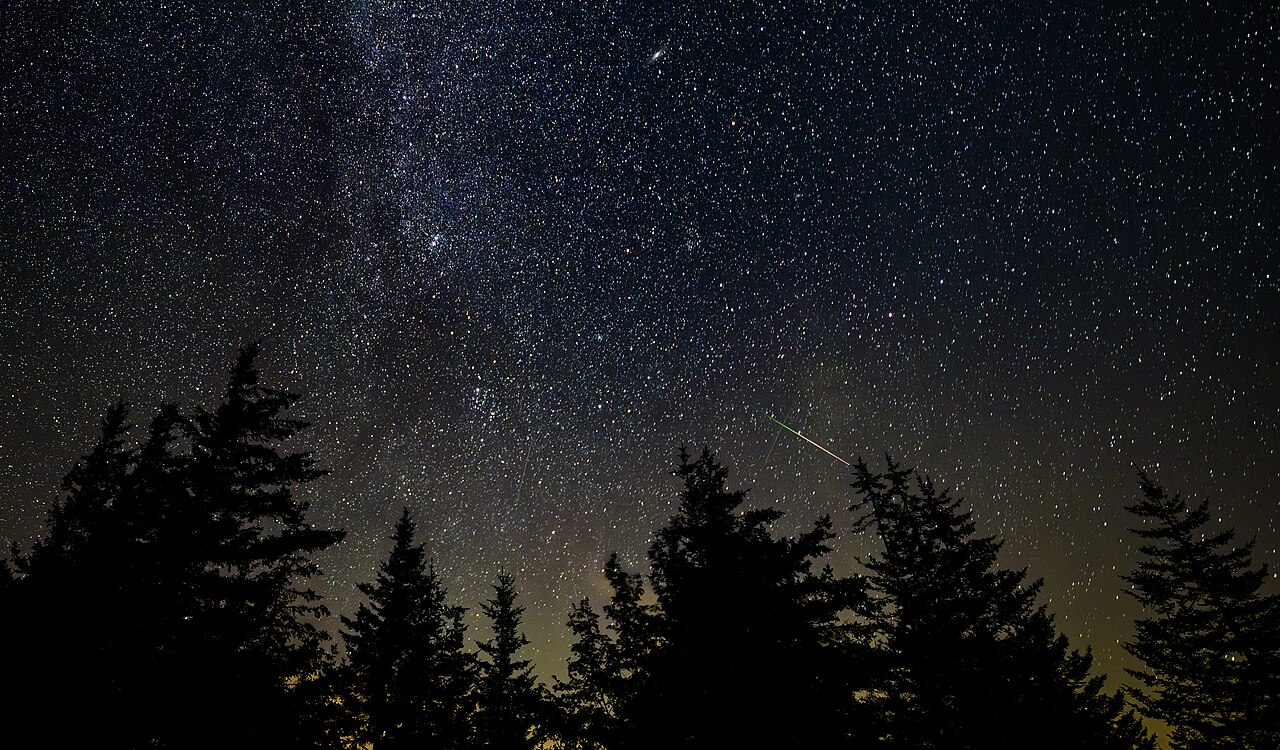
When you look at a bright star on a clear night, it can appear to pulse, flicker or shift slightly in colour. Astronomers call this effect scintillation. Light from a distant star travels through Earth's atmosphere before it reaches your eyes, and the atmosphere is not a perfectly uniform, stationary layer. Moving pockets of air differ in temperature and density, so they bend incoming light by slightly different amounts. As those pockets move, the amount and direction of starlight reaching you change rapidly. NASA describes this process as the reason stars seem to twinkle. The star itself does not normally brighten and dim several times per second. From above most of our atmosphere, this particular atmospheric flicker is absent. It is an optical effect between the star and the observer, not a message coming from the star.
How moving air can change what your eyes see
Think of a straight object seen through rippling water: even though the object is still, its outline seems to shift as the water moves. Earth's atmosphere creates a much subtler version of that effect. Turbulent layers of warmer and cooler air act like changing lenses, refracting incoming starlight and sometimes briefly concentrating or spreading the light in one direction. Because an ordinary star appears essentially as a single point to the unaided eye, changes along its line of sight affect almost all of its visible light together. NASA's Ask an Astrophysicist explains that the same turbulent cells cause atmospheric 'seeing', the blur and motion astronomers notice through telescopes. A cloudless sky is therefore not necessarily a steady sky: you can have clear air with considerable turbulence and very obvious twinkling.
Why planets generally shine more steadily
Jupiter or Venus can be extremely bright and look point-like to your naked eye, but there is an important geometric difference. Nearby planets have a small yet measurable apparent disc, whereas even distant bright stars are effectively unresolved points from Earth. Light arrives from many different parts of a planet's visible disc and follows slightly different paths through the atmosphere. The fluctuations tend to average one another out, so the planet's overall brightness usually seems steadier. NASA and Royal Museums Greenwich both describe this distinction. It does not mean planets are completely immune to turbulence: a planet low on the horizon, or one viewed through especially unstable air, can shimmer or flash too. Nor does lack of twinkling prove that a light is a planet. You need its position, movement and sometimes a sky chart to identify it confidently.
Why a star near the horizon flashes and changes colour
Many observers notice the strongest flicker when a bright star is just above distant trees, roofs or the sea. At low altitude its light passes through a longer path of atmosphere than when the same star is high overhead, increasing the chance that turbulent layers disturb it. Refraction also varies slightly with wavelength, so bright stars near the horizon can appear to flash red, blue or other colours in quick succession. Royal Museums Greenwich points to Sirius as a familiar example of colourful apparent twinkling. These changing colours are not necessarily changes happening inside Sirius. A star higher in the sky typically looks steadier, although local turbulence and weather can still affect the view. To make a fair comparison, observe the same star at different altitudes on the same night, rather than comparing unrelated photographs with different exposures.
How to tell a star from a planet without a telescope
On a clear evening, find a bright object and watch it for half a minute while keeping your eyes comfortably fixed on the general area. Rapid sparkle or colour changes suggest a star; a bright, relatively steady point could be a planet, particularly Venus or Jupiter when they are above the horizon. But this is a clue, not an identification test: bright stars can sometimes seem calm, planets may shimmer, and aircraft or satellites can also be mistaken for celestial objects. Use a reputable current sky map for your location and date to confirm what is visible. Do not assume that every unusually bright point is a planet or that apparent flashes predict incoming rain. Nearby artificial lights, headlights and atmospheric haze can confuse a casual observation. Unlike stars, aircraft and satellites can show a discernible pattern of motion over minutes.
Do stars still twinkle in space—and how do observatories fix it?
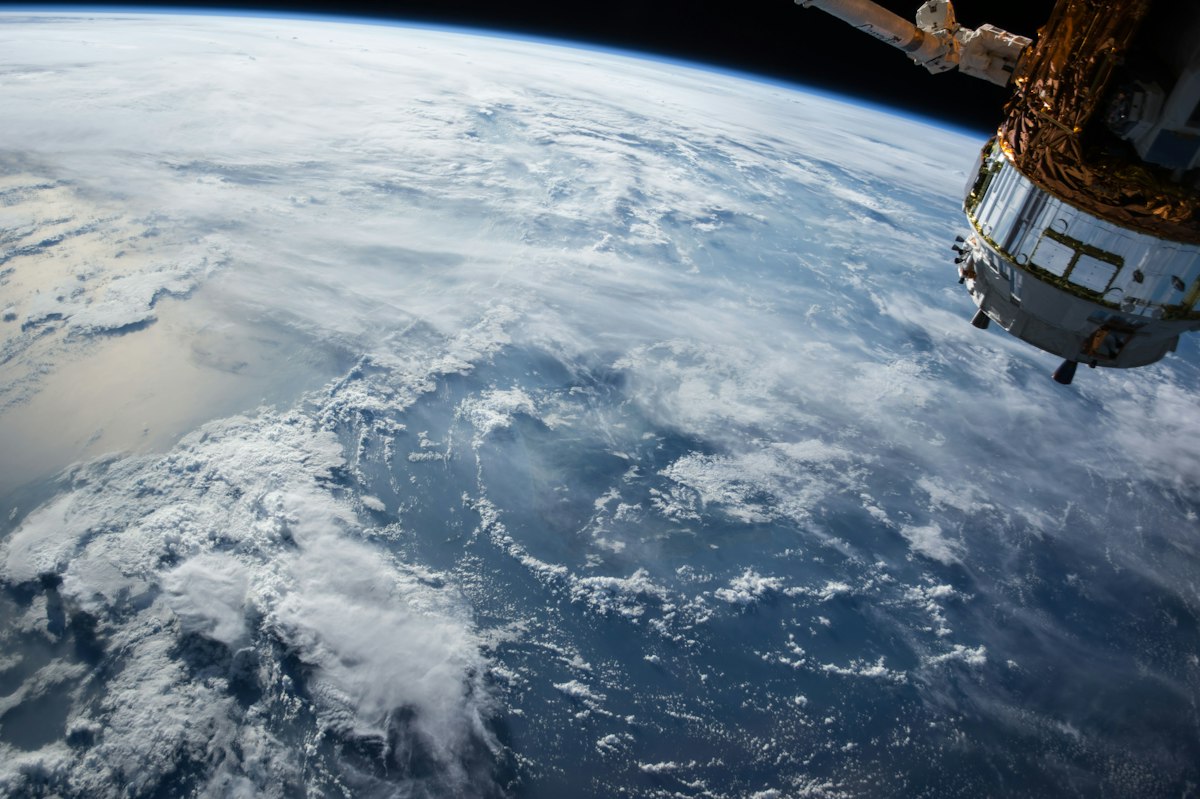
A space telescope operating above Earth's atmosphere does not view stars through the same turbulent air that causes terrestrial twinkling. That is one reason space observations can be so sharp. On Earth, astronomers choose good observing sites and use adaptive optics: instruments measure atmospheric distortions and rapidly reshape special mirrors to reduce their effect. The European Southern Observatory explains how this improves images from its large ground-based telescopes. There is also a separate concept called a variable star, whose actual light output changes due to processes such as pulsation or an eclipsing companion. Such physical changes are not the familiar second-by-second scintillation caused by our atmosphere. If you have wondered about a different daylight astronomy puzzle, see /guides/why-moon-visible-daytime/ and explore /topics/astronomy/ for more science-based observations.
- NASA Goddard — Why do stars appear to twinkle while planets don't? ↗
- Royal Museums Greenwich — Is that a star or a planet? ↗
- NASA Science — June 2024 skywatching: spotting stars and planets ↗
- European Southern Observatory — Adaptive optics and atmospheric seeing ↗
- NASA Science — APOD: Why Stars Twinkle (2000) ↗
A general educational overview, not a substitute for professional guidance. Check current local rules and trusted primary sources before making consequential decisions.
Share this article