The short answer: a stable way to rest that may also conserve heat
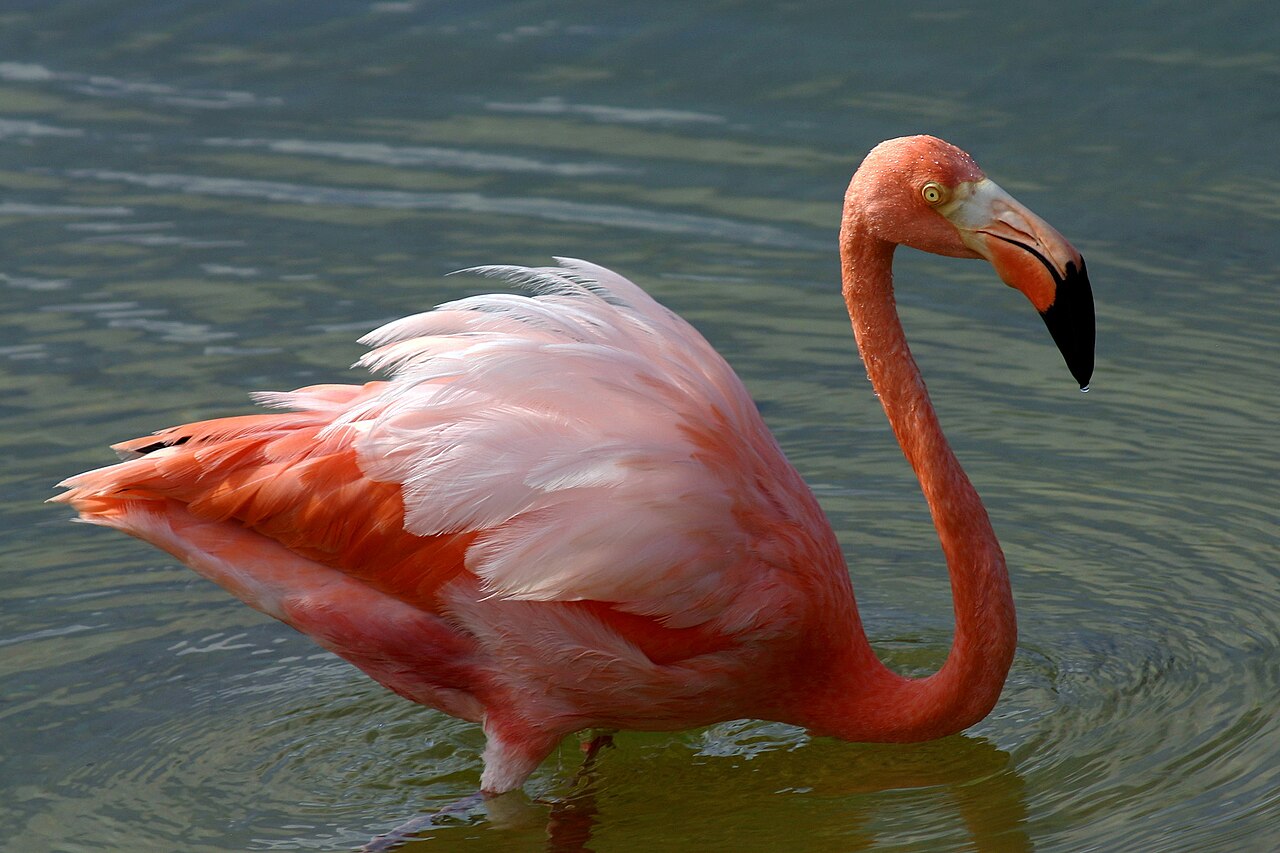
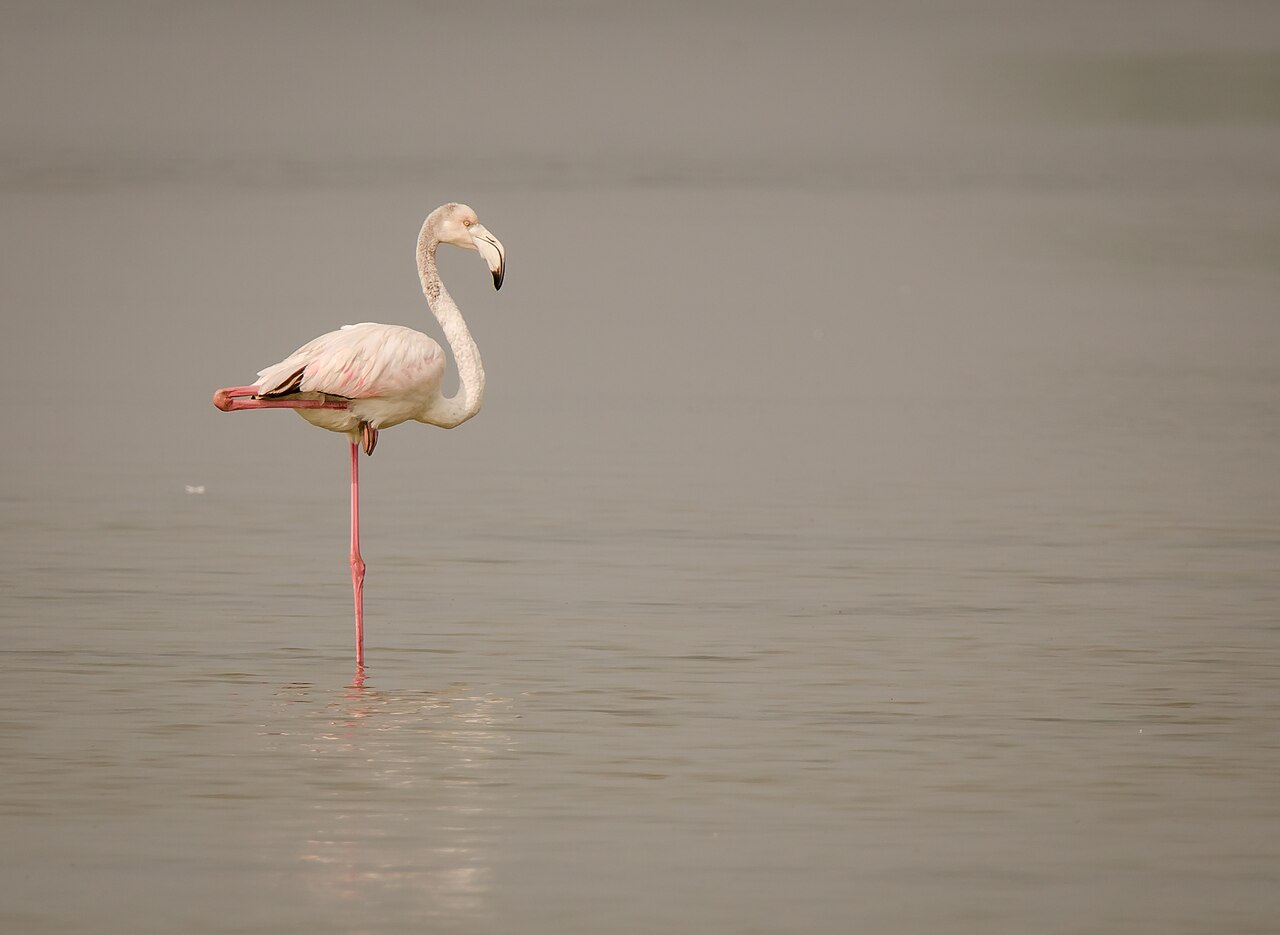
Flamingos regularly rest in shallow water or on land with one leg tucked against the body and the other supporting their weight. Two research-backed explanations help make sense of the pose. First, the birds' anatomy and weight distribution can make single-leg standing mechanically stable with very little active muscular effort. Second, keeping one leg out of cold water could reduce heat loss through the limbs. A 2017 study in Biology Letters provided direct biomechanical evidence for passive support, while behavioural studies have investigated the role of water and temperature. These findings do not prove that every flamingo lifts a leg for the same reason, or that warming the foot is always the main goal. The best answer distinguishes the physical ability to hold the position from the environmental reasons for using it. Both can matter at different times.
How can a large flamingo balance without constantly working its muscles?
Scientists Young-Hui Chang and Lena Ting examined how a flamingo supports its weight. In their 2017 experiment, preserved flamingo bodies could be positioned upright on one leg and maintain a remarkably stable stance even though the muscles were not active. The same bodies could not be supported as securely in an equivalent two-legged position. Measurements of living flamingos also showed that quiet, resting birds swayed much less than alert birds, with the force beneath the foot arranged in a way that reduced the need for muscular torque. The researchers proposed a passive, gravity-assisted system involving the geometry of the hip and knee joints. This does not mean a living flamingo never uses its muscles to reposition, walk or respond to danger. It means a particular resting posture can carry body weight without the constant effort that human one-legged balancing would normally demand.
Does lifting a leg keep the bird warmer in water?
Flamingos often feed and rest in water, where uncovered legs can transfer heat to the surrounding environment. Pulling one leg up toward the warm body reduces the exposed limb surface and could save energy. A study of captive Caribbean flamingos, first published in 2009 in Zoo Biology, found one-legged resting more common in water than on land. The researchers also reported fewer one-legged birds when the temperature was higher, supporting the heat-conservation explanation in that setting. But the picture is not uniform across studies. A small New Zealand pilot study published in Notornis observed a different temperature pattern for some captive flamingos and other wading birds. More recent work in Applied Animal Behaviour Science in 2024 again found that time spent on one leg was influenced by context, including being in water and inside housing. These observations suggest temperature is relevant without proving one universal rule.
Are flamingos sleeping when they stand on one leg?
Sometimes they are. Flamingos can spend long periods quietly resting and may fall asleep while balanced on a single supporting leg, as the Smithsonian National Zoo explains. The 2017 biomechanics study found especially small changes in balance while birds were in a quiet posture, compared with times when they were alert or actively responding to their surroundings. However, a one-legged flamingo is not necessarily asleep: it might simply be pausing, preening or watching its companions. Standing on one leg should not be taken as a reliable indicator of illness, injury or exhaustion by itself. The birds can also stand on two legs and shift weight as circumstances change. Like other aspects of animal behaviour, the meaning of the posture depends on movement, environment and whether the bird appears settled. Scientists do not need to assume that every one-legged pose reflects a special type of sleep to explain its mechanical stability.
Where is a flamingo's knee, and does it lock the standing leg?
The long visible segment of a flamingo's leg can be misleading. The joint that seems to bend backward partway down the leg is the ankle, not the knee. The actual knee and hip sit much higher, close to the body and partly hidden beneath the feathers, as the Smithsonian National Zoo and Georgia Tech explain. This arrangement helps explain why a flamingo's stance looks impossible to us: we are comparing different-looking body proportions. Researchers found that the bones and joints could settle into a stable geometry under gravity, but they did not identify a simple on-off latch that automatically locks the entire visible leg straight. It is more accurate to describe a posture-dependent passive support system. A bird may adjust its muscles to enter or leave that position while requiring little effort once it has settled. The raised leg is usually bent and tucked near the belly or feathers rather than mysteriously disappearing.
Do flamingos prefer a particular leg, and is the question solved?
In the Zoo Biology observational research, flamingos did not consistently prefer the right or left leg either individually or as a group: birds used both supporting legs across their resting time. This undermines the idea that the posture is simply an injury or a fixed handedness trait shared by all flamingos. What remains uncertain is how much the passive mechanics, heat loss, water depth, rest and immediate surroundings contribute to the decision to lift one leg in different species and habitats. Some hypotheses, such as standing on one leg to escape a predator faster, have not received strong support; one study found that birds took longer to begin walking from that pose than from two-legged rest. A thoughtful observation is to note whether the bird is on land or in water, the temperature and whether it is resting, rather than assigning one motive to all photographs. For another evidence-based animal curiosity, see /guides/why-do-zebras-have-stripes/ and explore /topics/wildlife/.
- Royal Society Biology Letters (2017) — Flamingos can support their bodies with little active muscular force ↗
- Zoo Biology (2010) — Why do flamingos stand on one leg? Temperature and water observations ↗
- Notornis (2011) — Why do birds stand on one leg? A pilot study in New Zealand ↗
- Applied Animal Behaviour Science (2024) — What influences unipedal resting in flamingos? ↗
- Smithsonian National Zoo — Flamingo anatomy, resting and the hidden knee ↗
- Georgia Tech — Biomechanics of the one-legged flamingo posture ↗
A general educational overview, not a substitute for professional guidance. Check current local rules and trusted primary sources before making consequential decisions.
Share this article