Pink begins with the food chain
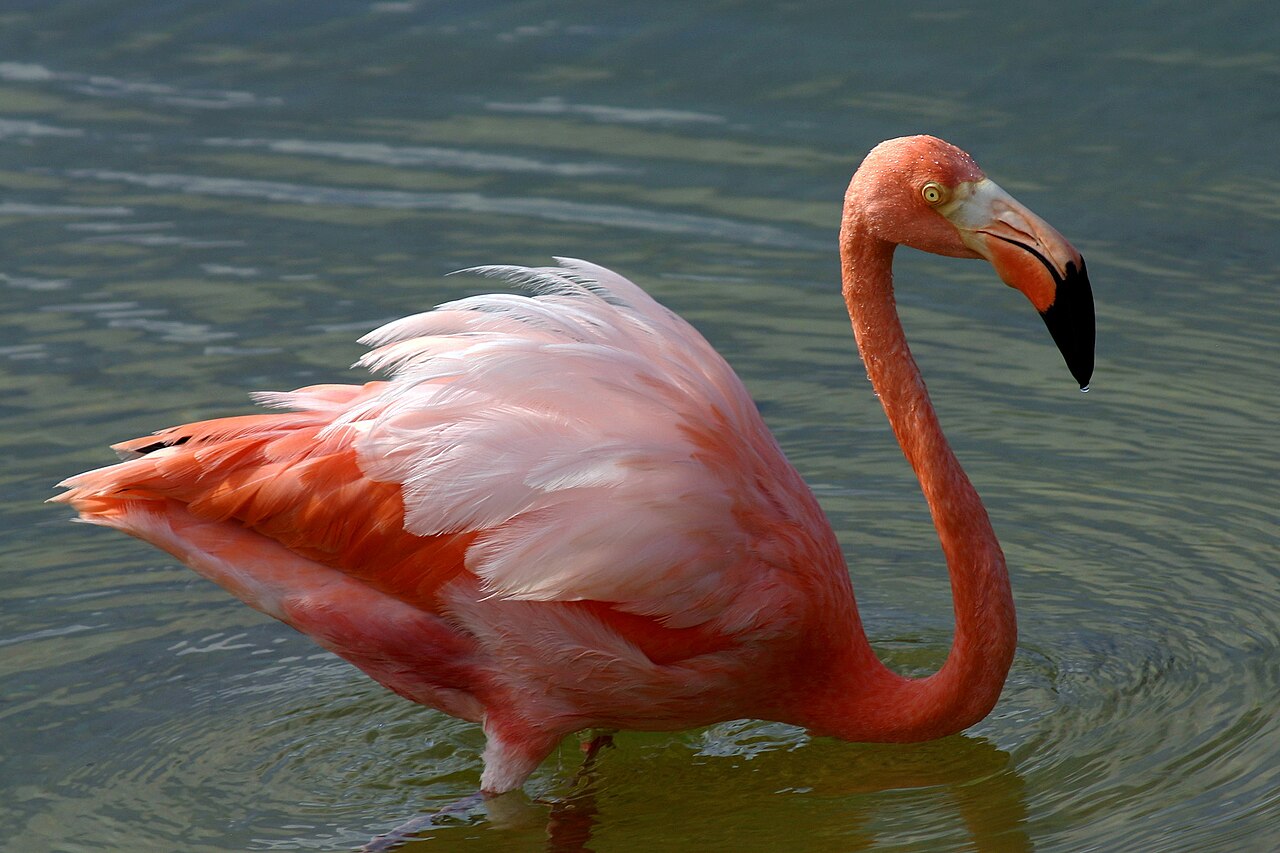
Flamingos obtain natural pigments called carotenoids through their food. Sources include algae and small organisms that themselves eat algae. The bird processes these compounds, and pigments enter growing feathers. The colour is not paint picked up while bathing or a reflection of pink water. Diet matters, but the change is gradual rather than an instant response to one meal.
Why chicks look different
Chicks hatch with whitish or grey down instead of bright adult plumage. Their bills initially look relatively straight; the characteristic shape develops as they grow. Parents feed them a nutritious secretion known as crop milk, which both parents can produce. The name does not mean these birds are mammals: it describes a different way of producing food for a chick.
Not every flamingo is equally pink
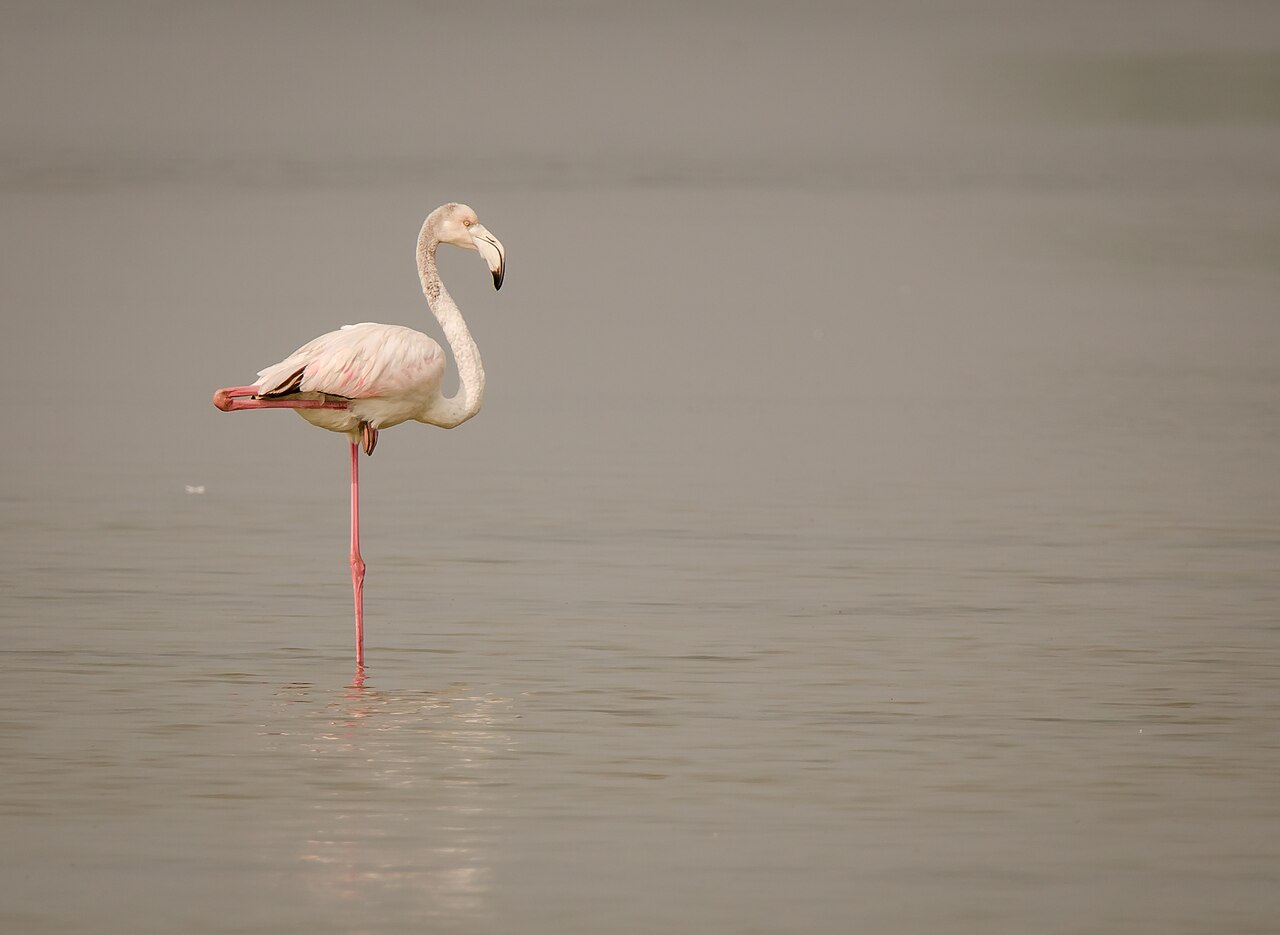
The intensity and distribution of colour differ between species, ages and individual birds. Adult American flamingos generally have more saturated plumage than many other species. Lighting, shadows and image processing also affect photographs. A single pale-looking picture therefore cannot establish that a bird is starving or ill: assessing its condition requires much more information than colour alone.
How the unusual bill gathers food
Flamingos filter food from water using specialised plates inside their bills. They lower their heads and turn their bills into a position that looks upside down to us, while tongue movements help pump water through. Suitable food particles remain inside. Diet varies with species and habitat, so saying that flamingos eat only pink shrimp overlooks the important role of microscopic algae.
The backwards knee is not a knee
The conspicuous joint partway down the long leg corresponds to an ankle rather than a knee. The actual knee is higher, close to the body and concealed by feathers. This shows how using a familiar human body plan can mislead us when looking at another animal. Watch from a distance and trace the foot and visible joint before comparing the movement with human walking.
Watch without changing their behaviour
Compare body and wing colours, feeding posture and bill movements. Record the species and lighting so that comparisons between photographs are meaningful. Never feed flamingos to make them brighter or approach their nests. Zoo staff manage their birds’ diets; in the wild, use binoculars and remain on permitted paths so that the flock can continue its normal activities.
A general educational overview, not a substitute for professional guidance. Check current local rules and trusted primary sources before making consequential decisions.
Share this article