Why the Sun remains dangerous
Even if most of the Sun is covered by the Moon, the visible portion can damage the retina. During partial and annular eclipses, there is no safe interval for looking directly at the bright Sun without proper solar protection.
Use purpose-built solar viewers
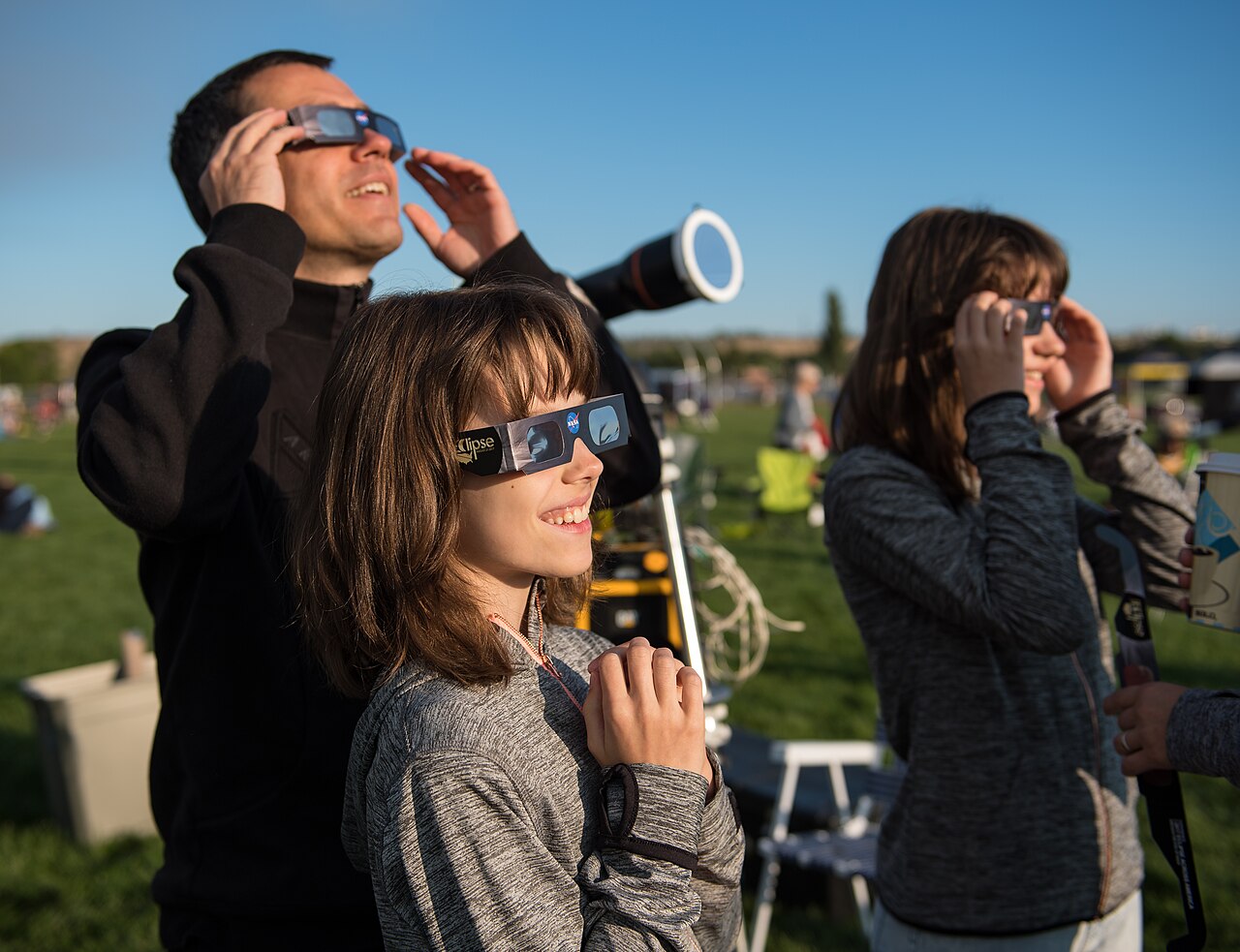
A suitable solar filter for direct viewing should meet the ISO 12312-2 standard. Inspect viewers for scratches, tears or damage and supervise children. Regular dark sunglasses, exposed photographic film and improvised tinted glass are not substitutes.
Cameras need their own filters
Looking through a telescope, telephoto lens or binoculars without a proper solar filter mounted at the front of the optics can cause serious eye injury. Wearing eclipse glasses while using unfiltered magnifying optics is not sufficient protection.
Indirect viewing is an alternative
A pinhole projector lets you safely view a projected image of the Sun on a surface. Keep your back to the Sun and never look through the pinhole at the source. During a total eclipse, the exceptionally brief totality phase follows special rules.
A general educational overview, not a substitute for professional guidance. Check current local rules and trusted primary sources before making consequential decisions.
Share this article