Think of a partnership, not a tiny plant
A lichen combines a fungus with photosynthetic partners, usually algae or cyanobacteria. Other microorganisms can also be involved, making the association more complex than a simple pair. The photosynthetic partner supplies sugars, while fungal tissue makes up much of the body. This is why a lichen should not be classified by its colour as merely moss or mould.
Look for broad growth forms
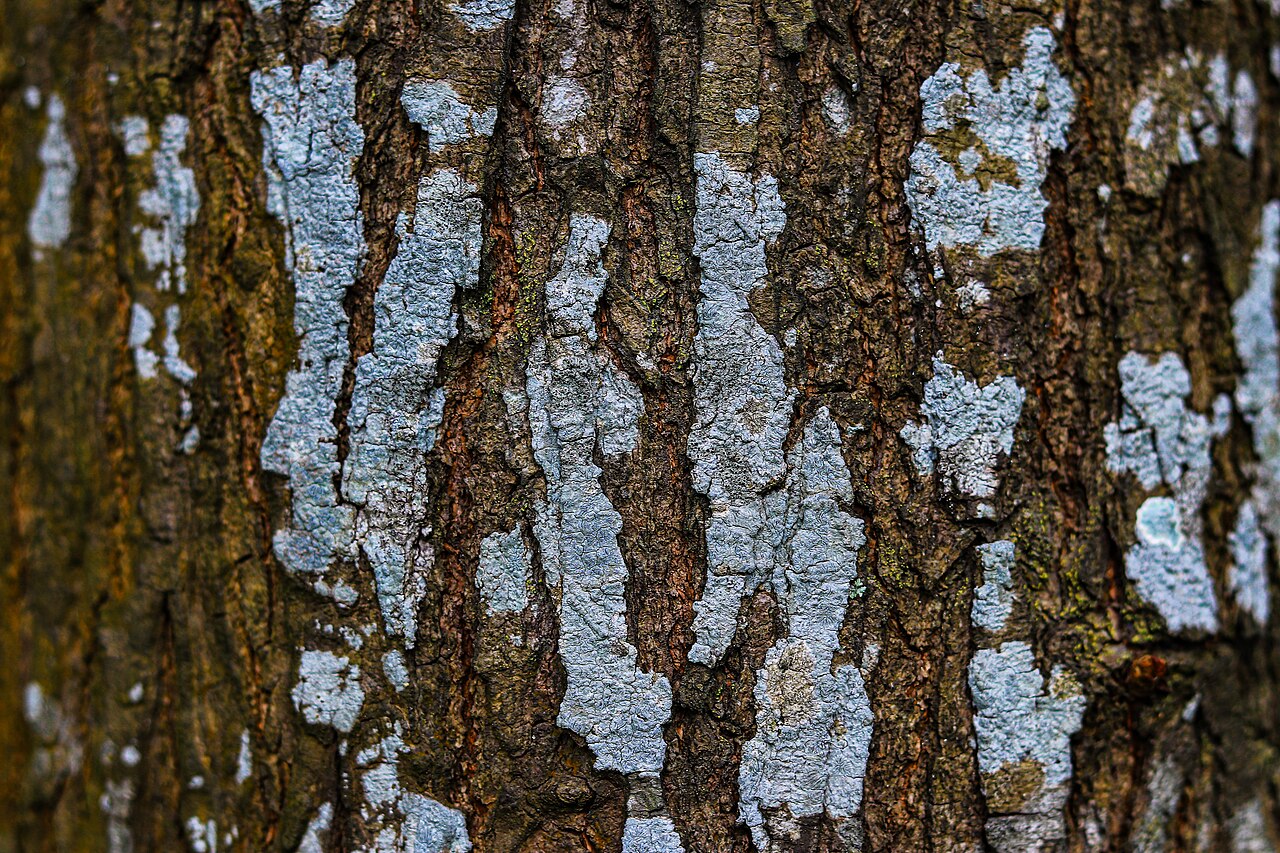
Some lichens form close-fitting crusts, others have leafy lobes, and others branch or hang like miniature shrubs. These are descriptive forms, not successive stages that every individual must pass through. On one tree you may find several forms together. Photograph both the whole patch and a close detail instead of assuming that similar shapes identify the same species.
Observe what the lichen grows on
Record whether the surface is bark, stone or soil and note shade and moisture. A lichen on a tree is not automatically evidence that it is damaging the tree. Use a hand lens without scraping the surface, and leave attached material in place. Revisit the same patch after rain to compare its appearance with a dry-day photograph.
Avoid turning one patch into an air test
Lichen communities can help researchers study environmental conditions, but species differ in their responses. A single colourful patch cannot certify clean air, and an empty trunk cannot prove pollution. Tree species, habitat and local conditions also matter. If you want to contribute useful observations, follow a recognised survey method rather than inventing a pollution score from appearance alone.
Build a small observation record
Choose a few accessible surfaces on a permitted walking route. Record date, location, substrate and photographs with a scale placed beside the patch, without disturbing it. Use a regional identification guide and mark uncertain names as uncertain. Do not taste or collect lichens to identify them; this article explains their ecology, not edibility or medicinal use.
For health, poisoning or safety concerns, do not rely on this page to diagnose or assess an emergency. Contact qualified local services promptly when needed.
Share this article