First check whether the cycle really finished
A small amount of water may normally remain below the filter in some dishwashers; a pool spread across the bottom of the tub is a different symptom. Confirm that the wash program ended and the door closed properly. Note any error code, unusual noise or leak. If the appliance stopped after a power outage, refer to its manual before restarting. Do not repeatedly run a dishwasher that leaks, emits a burning smell or trips a breaker. Record the water level and whether any drain noise was audible.
Turn off power before touching the filter
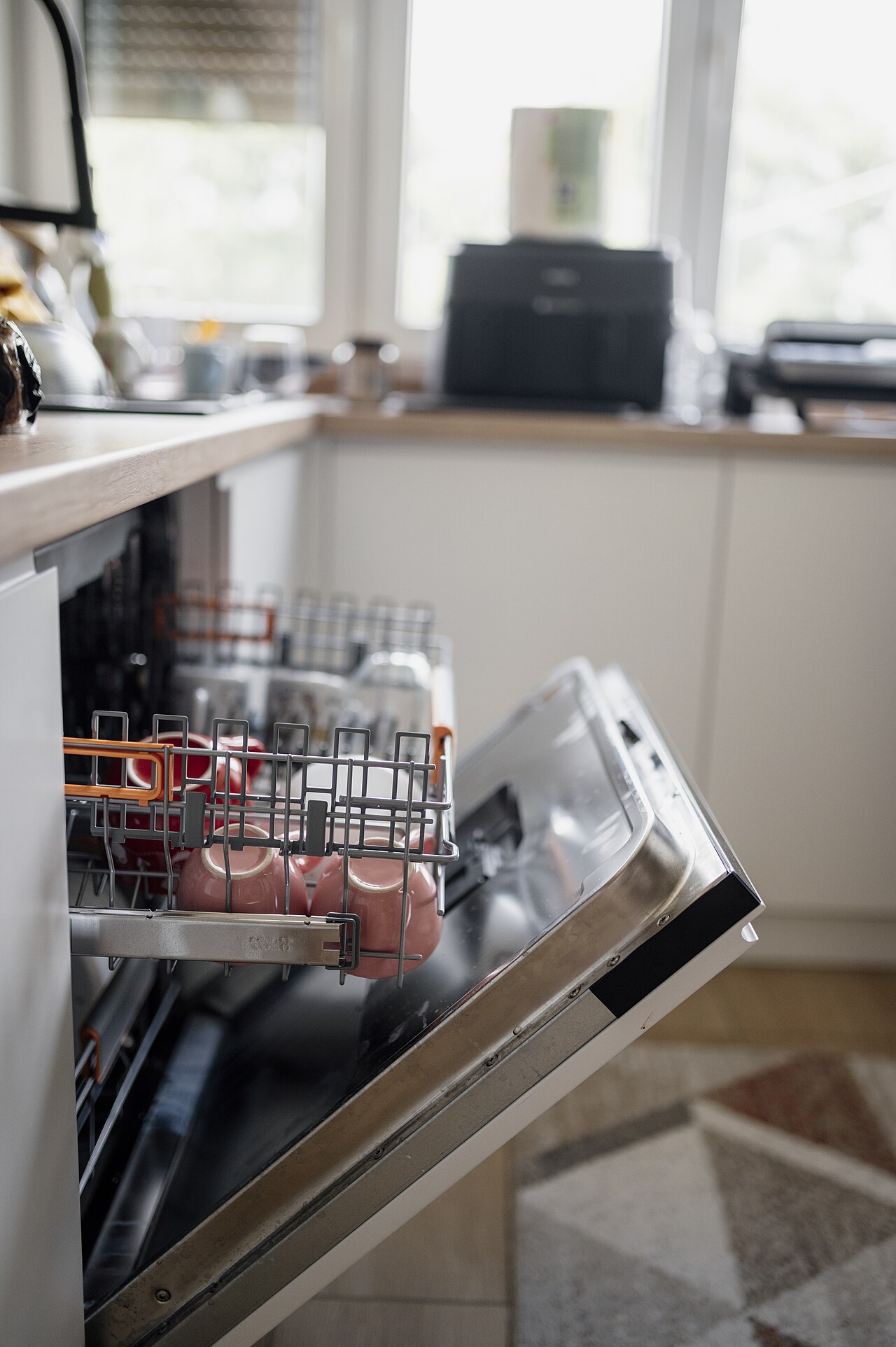
Follow the manufacturer's instructions before doing any user maintenance. Turn off power as directed, and keep hands away from electrical components or moving parts. Pull out the lower dish rack and identify the filter if your model has a user-removable one. Gather towels and a shallow container for any water that could spill. Glass shards and sharp bones may be hidden in the sump; do not feel around blindly. If the instructions say the filter is fixed, do not force it free with a screwdriver or other sharp tool.
Clean the filter and reachable sump
When the filter is designed for owner cleaning, unlock it according to the manual, rinse with warm water and use a soft brush if recommended. Inspect only the visible, reachable area for labels, food debris or small objects; do not push fingers near a concealed pump impeller. Replace all filters securely and do not operate the appliance with them missing. A filter that is not seated correctly may permit scraps to enter the pump. After reassembly, run the maker's recommended drain or quick test and check whether the water leaves.
Inspect the drain hose and the sink connection
A dishwasher typically sends wastewater through a hose to the sink drain, a disposal fitting or an air-gap device. If the sink is also backing up, the obstruction may be downstream from the dishwasher. Inspect the visible hose for bends or crushing without pulling out a heavy unit or loosening plumbing. Some new disposal installations need an inlet knockout removed before a dishwasher can drain, but work on fittings is for someone familiar with the appliance and local plumbing rules. Never pour chemical drain cleaner into the dishwasher.
When the pump or controls require a technician
A steady hum without water movement can indicate a blockage or pump fault. Silence during a supposed drain stage may indicate a switch, sensor or control issue, but the sound alone cannot identify the failed part. Repeated leaks, grinding noise, electric shocks, a tripped breaker or a burning odour mean stop using the machine and seek qualified service. Do not bypass the door latch or connect the pump to mains electricity for a do-it-yourself test. Make a note of the model and error code for support.
Prevent repeat blockages and know the next step
Follow the manufacturer's instructions for scraping large food scraps from dishes, cleaning the removable filter and using the correct detergent. Do not mix bleach, vinegar and drain chemicals in the appliance. If the machine drains again, observe one normal cycle for leaks and ensure that the sink drain flows freely. If standing water returns, request professional diagnosis rather than repeatedly forcing the program. Related MURDILIMAX guides explain /guides/find-water-leaks-home/ and /guides/washing-machine-smells-cleaning-guide/.
A general educational overview, not a substitute for professional guidance. Check current local rules and trusted primary sources before making consequential decisions.
Share this article