Sunlight contains many colours
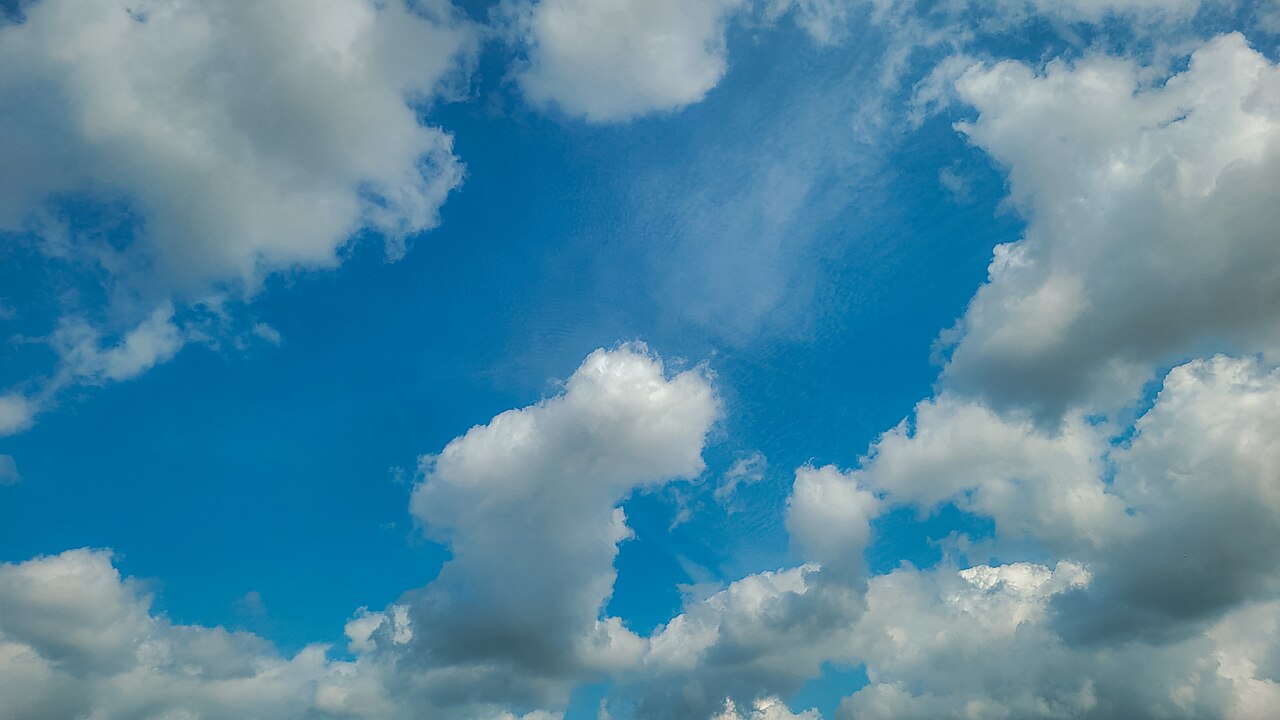
Sunlight looks white but contains a broad range of visible wavelengths. As it travels through the atmosphere, air molecules redirect some of it in different directions. Short visible wavelengths, associated with blue and violet, scatter more strongly than red. Looking at clear sky away from the Sun, we see this scattered light rather than a blue surface above Earth.
The ocean is not the explanation
Blue sky does not require water beneath the observer: it also appears over land and deserts. The main process is sunlight interacting with atmospheric molecules, chiefly nitrogen and oxygen. The ocean can itself reflect sky colour, but that is a different part of the scene. Comparing locations is more informative than drawing a conclusion from one beautiful seaside photograph.
Why the sky does not look violet
Violet light is strongly scattered, but the colour we perceive also depends on the sunlight’s composition and our visual sensitivity. There is less violet in sunlight, and our eyes respond differently to different parts of the spectrum. The resulting mixture of scattered light appears blue. Choosing the sky’s colour by saying the shortest wavelength wins leaves out the observer.
What changes at sunset
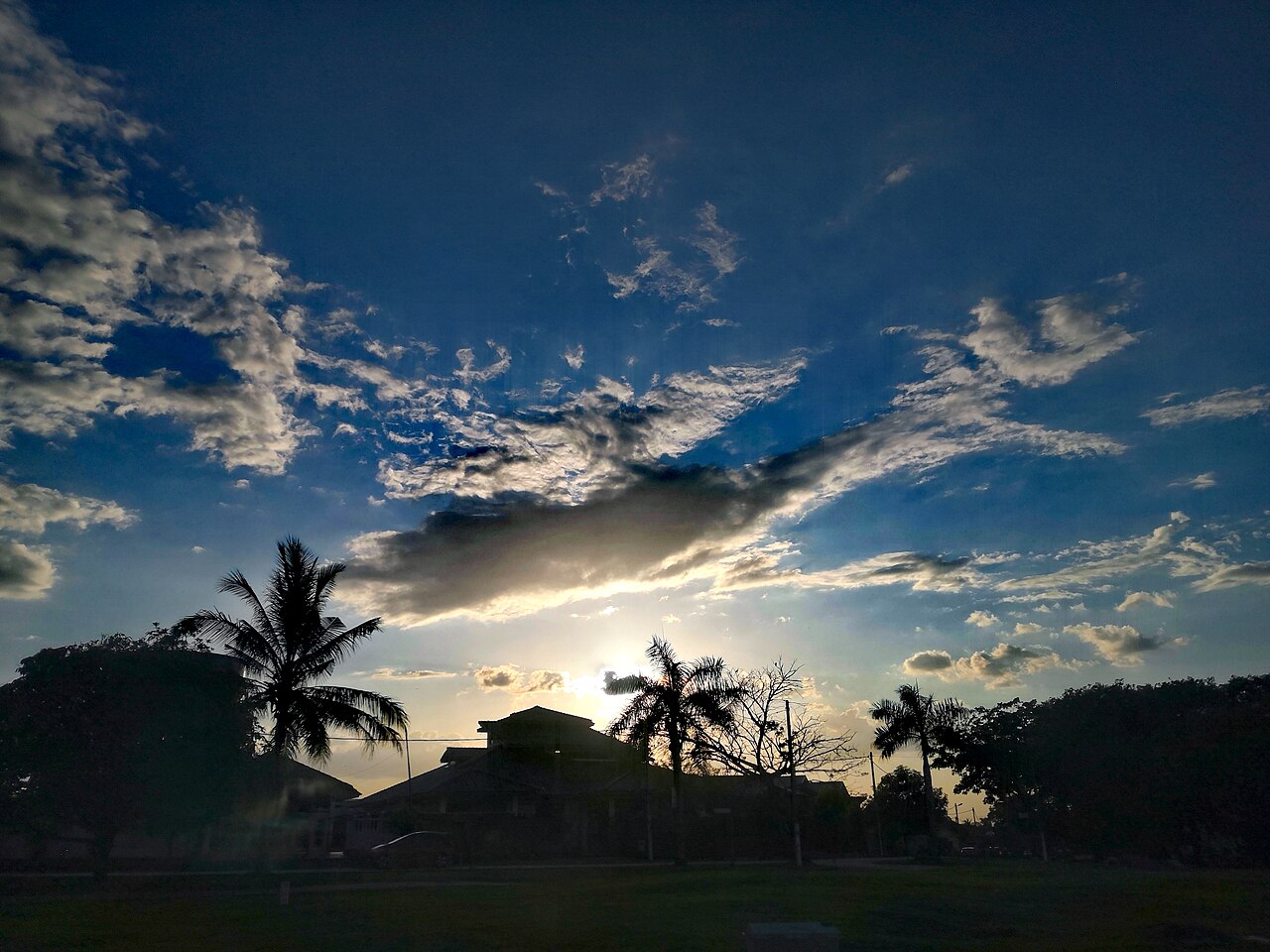
When the Sun is low, its light travels a longer route through the atmosphere. Much of the blue light scatters away, leaving reds and oranges more prominent in the light arriving from the Sun’s direction. The Sun itself does not change temperature over a few hours in a way that explains this effect. The path through the air changes, rather than the light source.
Why no two evenings look identical
Clouds, aerosols, haze and atmospheric clarity affect the scene. A low Sun therefore does not guarantee a vivid scarlet sunset, and a red colour alone does not prove polluted air. Blue often looks paler near the horizon because of the longer light path and additional scattering. Assessing air quality requires measurements rather than simply judging an evening photograph’s colour.
Observe the change for yourself
Choose a safe location and compare sky overhead with sky near the horizon at different times. Note cloud cover and viewing direction. A camera can alter white balance and saturation, so pictures taken with automatic settings are not precise colour measurements. Never look directly at the Sun or point binoculars at it: neighbouring areas of sky are enough for this observation.
A general educational overview, not a substitute for professional guidance. Check current local rules and trusted primary sources before making consequential decisions.
Share this article