Three hearts have different jobs
Two branchial hearts send blood through the gills, where it picks up oxygen. A third, systemic heart circulates blood through the rest of the body. These are cooperating parts of one system, not three interchangeable backup pumps. Human circulation divides its flows differently, so comparing animals only by the number of hearts misses much of the explanation.
What makes the blood blue
Octopuses transport oxygen using haemocyanin, a protein containing copper. In its oxygenated state it gives the blood a bluish colour. Humans use iron-containing haemoglobin for this job. Blood colour does not explain an octopus’s changing skin pattern, however: separate structures produce its external colour changes.
Does it really have nine brains
That expression loosely describes the central brain and substantial nerve structures in its eight arms. It is a simplification, not nine identical, independent brains. Much sensory processing takes place in the arms while the central nervous system coordinates behaviour. An arm can carry out complex movements without being a separate animal with intentions of its own.
How its appearance changes
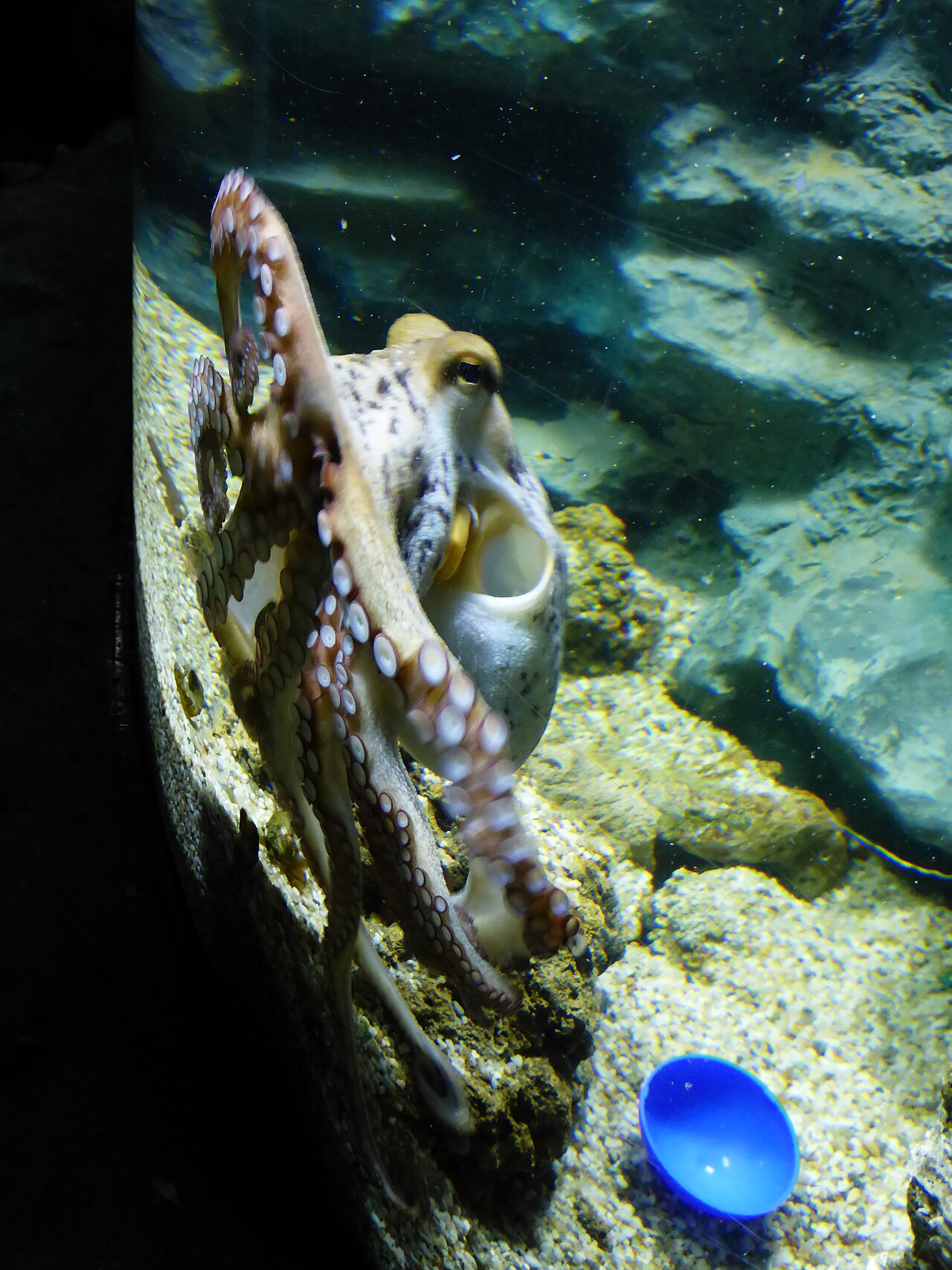
The skin contains pigment cells and structures that reflect light. Controlling these changes the visible pattern; some octopuses also alter their skin’s surface texture. Camouflage helps them blend into their surroundings, but is not an exact copying system for any possible picture. Species, lighting, the animal’s state and the background all affect what an observer sees.
How it fits into narrow spaces
A soft body without an internal bony skeleton can change shape dramatically. An octopus still has a hard beak and other anatomical constraints, though. The claim that it can squeeze through absolutely any gap is wrong. Famous container escapes demonstrate the flexibility and behaviour of a particular animal, not a universal minimum opening size.
Observe without disturbing it
At an aquarium, watch how the suckers work, how the animal searches for shelter and how its skin pattern changes. Do not tap the glass to provoke a reaction. In the sea, avoid pulling octopuses from shelters or handling them: it causes stress, and some species have dangerous toxins. Patient observation reveals more than trying to make an animal perform a trick.
A general educational overview, not a substitute for professional guidance. Check current local rules and trusted primary sources before making consequential decisions.
Share this article