Notice when and where the flickering happens
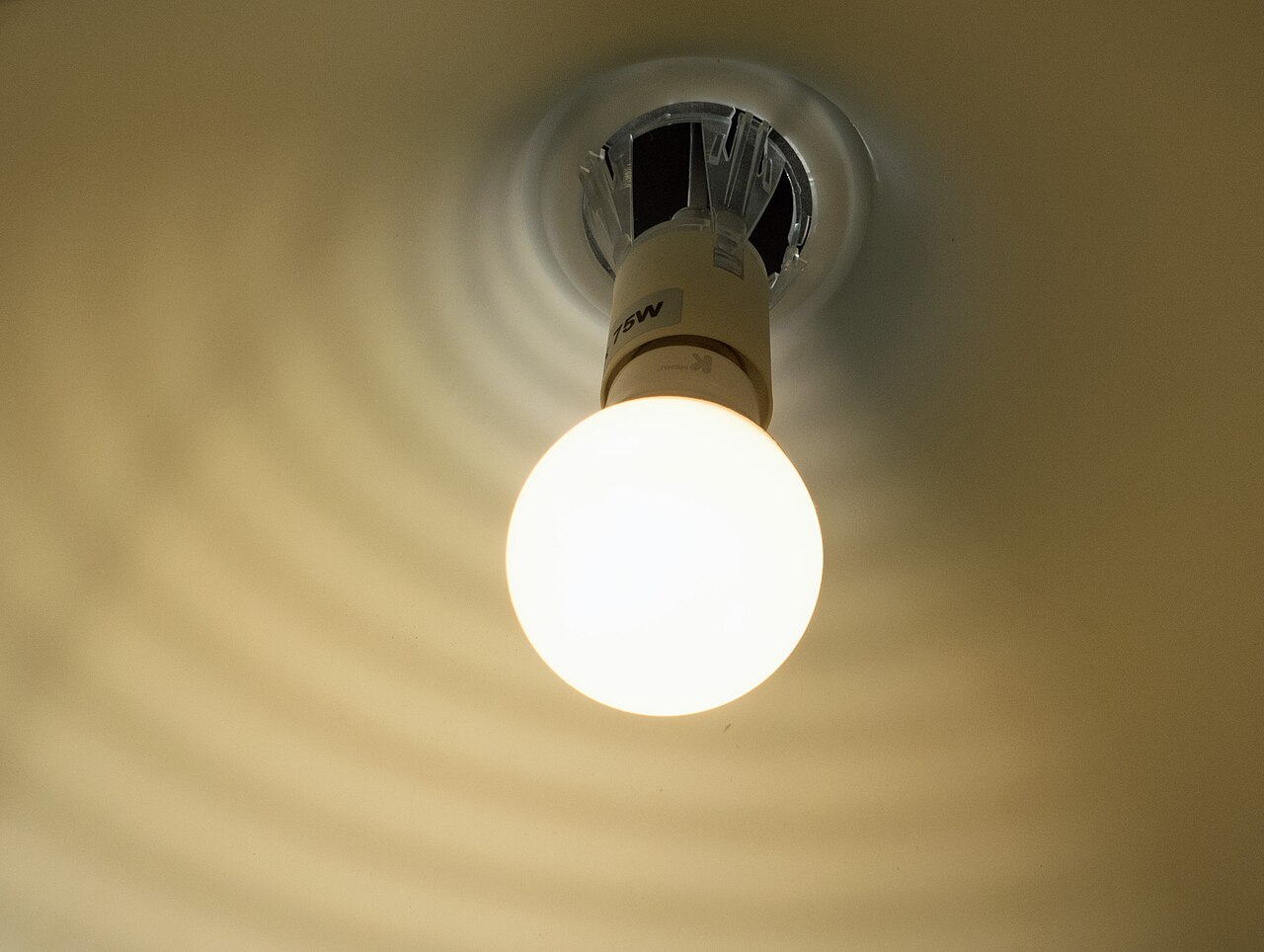
Does a single LED lamp blink only at low brightness, or do several rooms dim together? Record whether the effect appears when a refrigerator or air conditioner starts, after the lamp warms up, or only on one switch. A smartphone camera sometimes shows bands or flicker that your eyes do not because of camera exposure timing; that alone is not proof of an electrical fault. If lights flicker together with buzzing outlets, sparks, a burning smell or circuit breakers tripping, stop experimenting and contact a licensed electrician promptly.
Check whether the LED supports your dimmer
Older dimmer switches were often designed for incandescent bulbs and may not control low-power LED drivers smoothly. ENERGY STAR notes that not every LED fixture works with every dimmer and recommends checking the manufacturer's compatibility list. If the bulb's packaging does not explicitly say dimmable, do not use it on a dimmer expecting stable output. Different LED models can behave differently on the same switch. Replacing the lamp with a manufacturer-approved compatible LED is a simpler test than changing wiring.
Try a known-good bulb safely
Turn the light off and allow it to cool. If the fixture has an ordinary replaceable lamp and is safe to access, test another compatible bulb that matches the fitting, voltage and maximum fixture rating. Do not reach into a damaged socket or remove a fixed LED assembly. If the replacement works consistently, the original bulb or its integrated electronic driver may be failing. If both flicker, the dimmer, socket, voltage supply or wiring may need investigation. Do not ignore the problem if the fitting feels unusually hot.
Other causes: power changes and LED drivers
LEDs require electronics to convert incoming electrical power into controlled current. Inexpensive or failing drivers may visibly pulse, especially with incompatible control gear. A large appliance starting can also create a short change in supply voltage. Some smart lamps can flash during pairing or after a firmware problem; use the manufacturer's troubleshooting instructions. Persistent fluctuations affecting multiple rooms deserve an electrician's attention because a loose connection is more serious than an individual defective bulb.
When flicker becomes an electrical safety issue
The Electrical Safety Foundation International identifies unexplained flickering or dimming lights, arcing, buzzing, shocks, repeated breaker trips and hot or discolored switch plates as warning signs of wiring hazards. A loose neutral or damaged connection can create unpredictable behavior and should not be diagnosed by touching conductors. Do not open a wall switch, bypass a fuse, change breaker ratings or handle exposed live wiring. If you see smoke or a burning smell, switch off power if safe and follow local emergency procedures.
Choose a long-term fix without unnecessary expense
For a single dimmable LED, start by checking whether it is on the fixture's or dimmer's compatibility list, then compare a trusted replacement. Keep receipts and model numbers; many LED bulbs have warranties. A qualified electrician can inspect wiring, switches and voltage if the problem persists. For other electrical household questions, see /guides/energy-saving-home-basics/ and /guides/electrical-safety-home/ where available. Always follow local building rules rather than an online wiring diagram.
A general educational overview, not a substitute for professional guidance. Check current local rules and trusted primary sources before making consequential decisions.
Share this article