Safety comes before the tire
If a tire loses pressure while driving, hold the steering wheel firmly, ease off the accelerator and avoid sudden steering or braking. Turn on hazard lights when appropriate, and find a safe, level place well away from moving vehicles. A parking area is preferable to a narrow highway shoulder. If you cannot park safely, if visibility is poor or traffic is close, do not attempt a roadside wheel change. Follow local road rules, move occupants to a safer position when possible and contact professional roadside help. No tire is worth being struck by another vehicle.
Check the spare and your vehicle manual
Look in the owner's manual for the spare wheel procedure, approved jack support points and wheel-bolt tightening specification. Some cars have no spare and carry only a limited puncture-repair kit; some vehicles need special lifting precautions. Before doing any work, check that the spare is suitable and inflated, and that you have the vehicle's wheel wrench, suitable jack and any locking-wheel-nut key. Do not improvise a jack point on a plastic trim panel, thin floor metal or a battery enclosure. If anything is missing or unfamiliar, ask for roadside assistance.
Stabilise the car and loosen bolts first
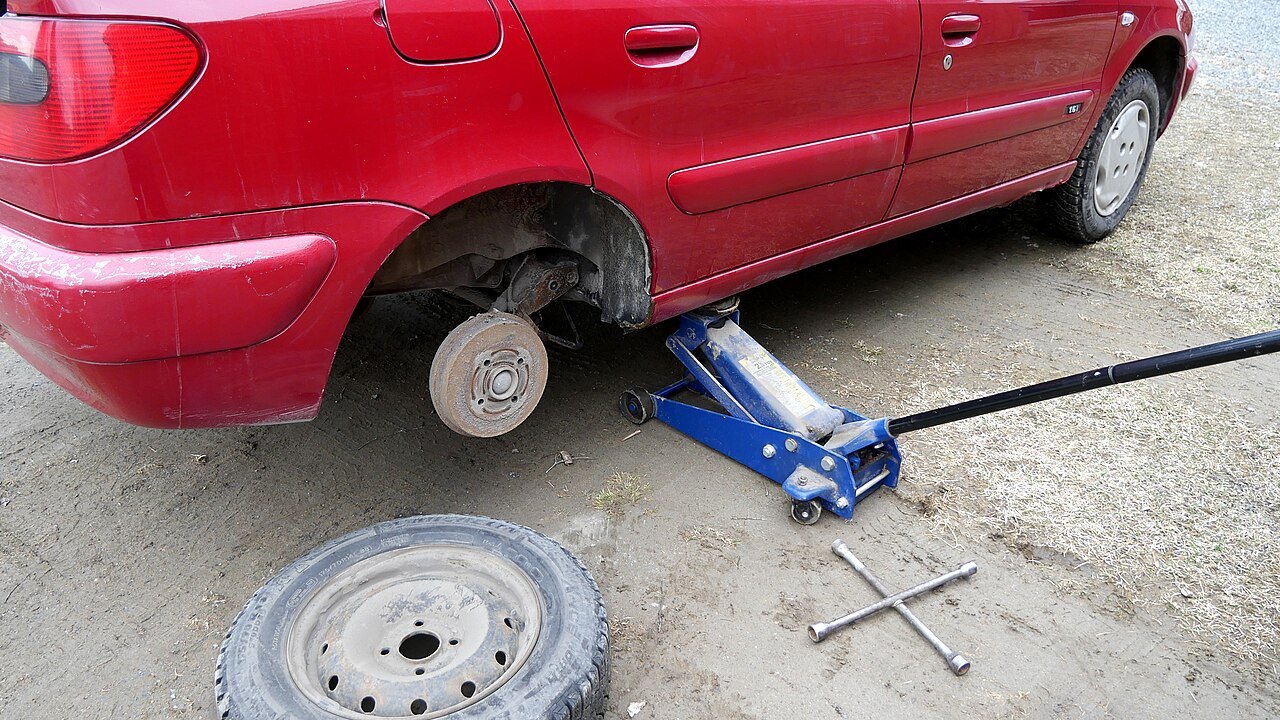
With the vehicle switched off on firm, level ground, set the parking brake and select Park, or the manufacturer's recommended gear for a manual transmission. Keep bystanders clear. Follow the owner's manual about wheel chocks and lifting. Before raising the vehicle, loosen the wheel fasteners slightly in the specified direction with the correct wrench; do not remove them yet. Never work below a vehicle supported only by its roadside jack. If the wheel nuts will not loosen without excessive force, stop rather than jumping on a wrench or destabilising the vehicle.
Lift only at the approved support point
Place the jack at the exact reinforced lifting point shown for that wheel in the vehicle manual. Watch that it stays vertical and stable as the flat tire lifts just clear of the ground. Remove the loosened wheel fasteners and keep them in a clean place. Carefully remove the damaged wheel, then position the spare on the hub and start all fasteners by hand to avoid cross-threading. If the ground shifts, the jack tilts or the car feels unstable, stop immediately and move clear. Never place your head, arm or body under the raised car.
Tighten correctly and respect spare limitations
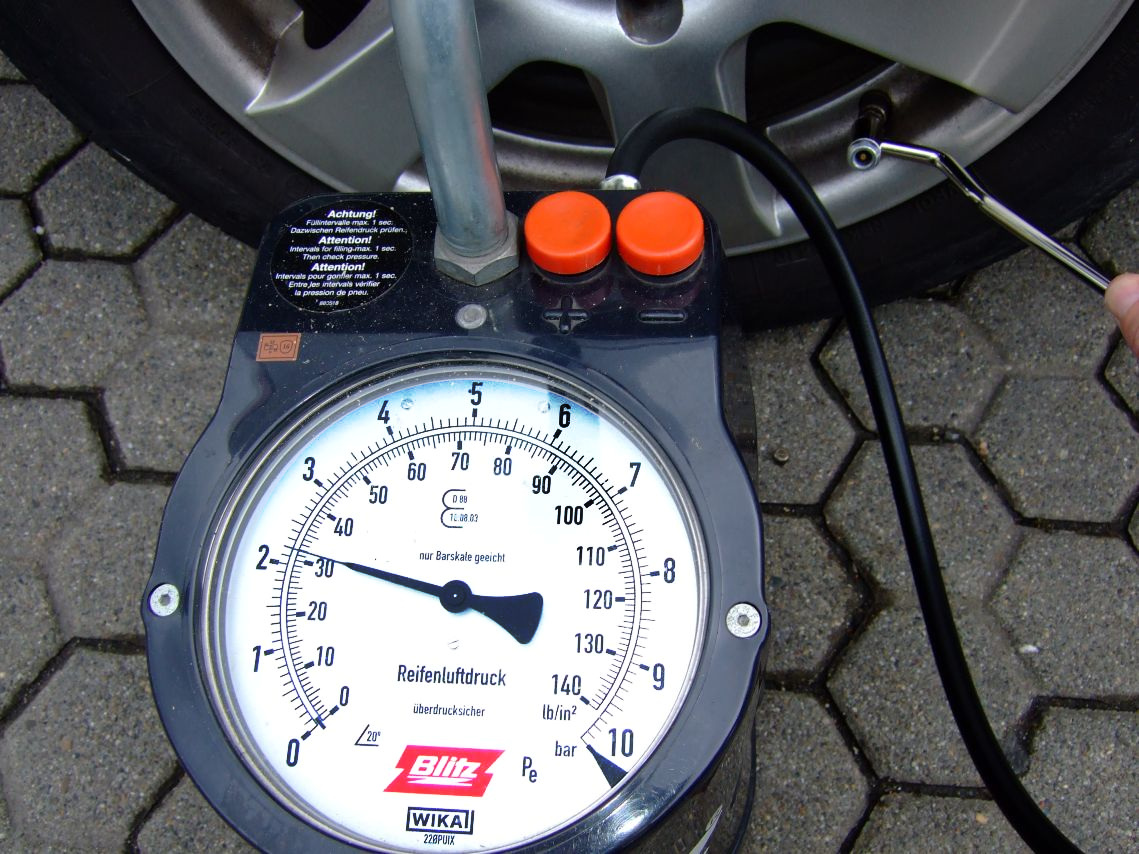
Snug the bolts by hand in a criss-cross sequence, then lower the wheel to the ground according to the manual. Tighten the fasteners to the manufacturer's specified torque, ideally with a suitable torque wrench. Recheck their tightness as required by the manual or repair shop. Temporary spare tires commonly have restrictions on speed, distance and road use: read the sidewall and vehicle instructions rather than assuming every spare is full-size. A tire-repair sealant may be unsuitable for sidewall damage, so do not rely on it without reading the kit instructions.
Get the damaged tire inspected promptly
Before moving, stow the jack, wheel and tools securely, check the spare's pressure if possible, and confirm that no tools are under the vehicle. Drive conservatively to a qualified tire service or arrange towing. Ask the technician whether the original tire can be repaired; sidewall damage and driving on a completely flat tire may make it unsafe. This guide is an emergency orientation, not a replacement for your particular vehicle's manual. If you are uncertain about the lifting procedure, the correct choice is to call for help.
A general educational overview, not a substitute for professional guidance. Check current local rules and trusted primary sources before making consequential decisions.
Share this article