Navigation and communication matter first
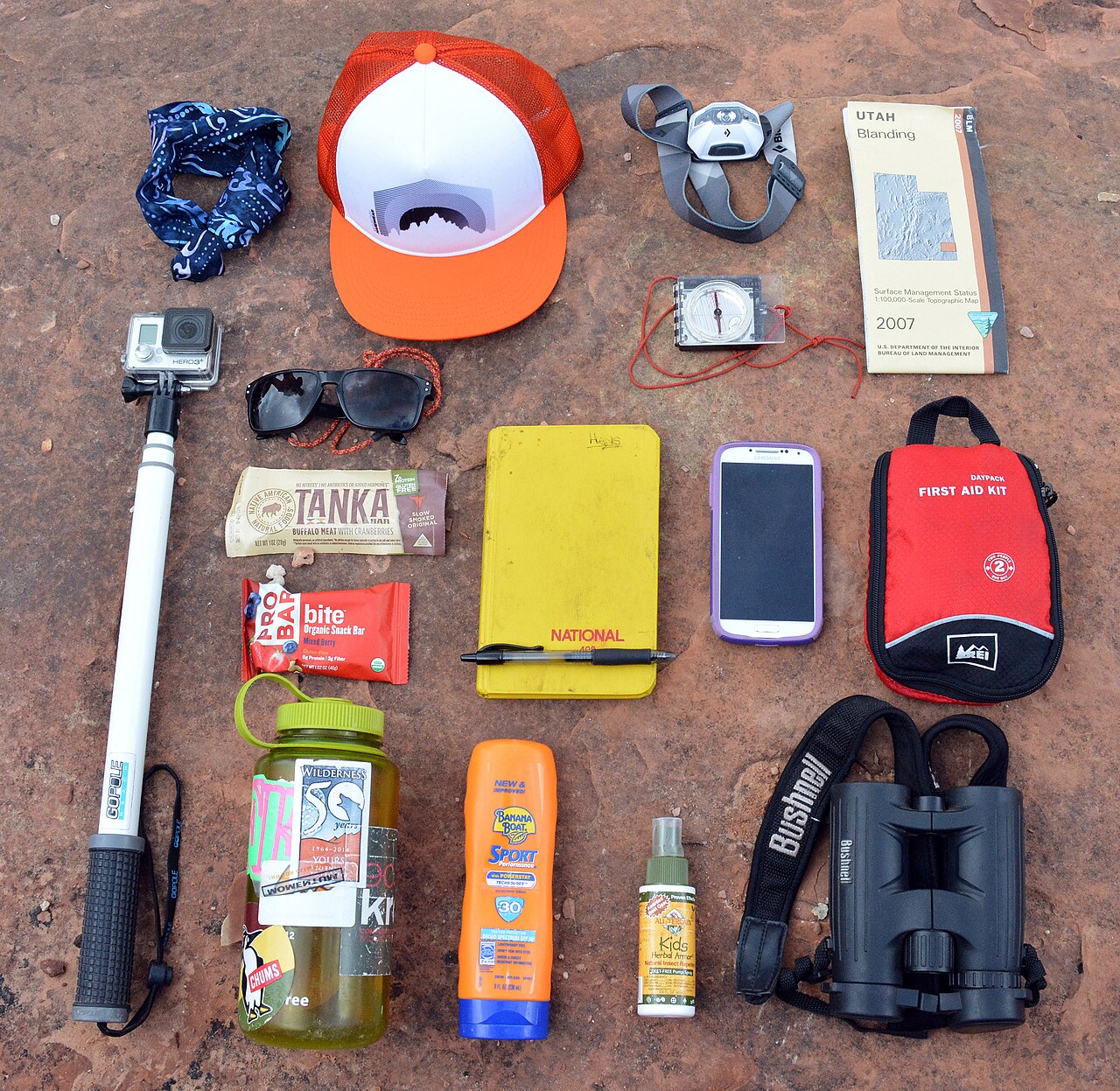
Download an offline route and learn how to use a map or compass; a phone may lose reception or battery power. Let someone know your destination and expected return. Check official trail access rules, the weather and how early daylight ends.
Prepare for changing conditions
Bring suitable spare layers, a rain shell, sun protection and a small reliable light even if the plan is to finish before sunset. Conditions on hills or near water may change quickly. Walking shoes and weather protection are more useful than an elaborate but uncomfortable kit.
Carry water, food and basic emergency supplies
Plan enough drinking water and a modest reserve, with treatment supplies if your route requires collecting water. Pack snacks, basic first aid, any personal medication and an appropriate emergency shelter or insulating layer for remote trips. Follow local rules for fire and wildlife.
Fit the kit to the actual hike
A city park circuit and a remote mountain route have different hazards. NPS uses ten essential categories as a planning framework, not a universal shopping list. Know when to turn around, and do not rely on an emergency service to compensate for an unrealistic plan.
A general educational overview, not a substitute for professional guidance. Check current local rules and trusted primary sources before making consequential decisions.
Share this article