The short answer: the pigment balance changes
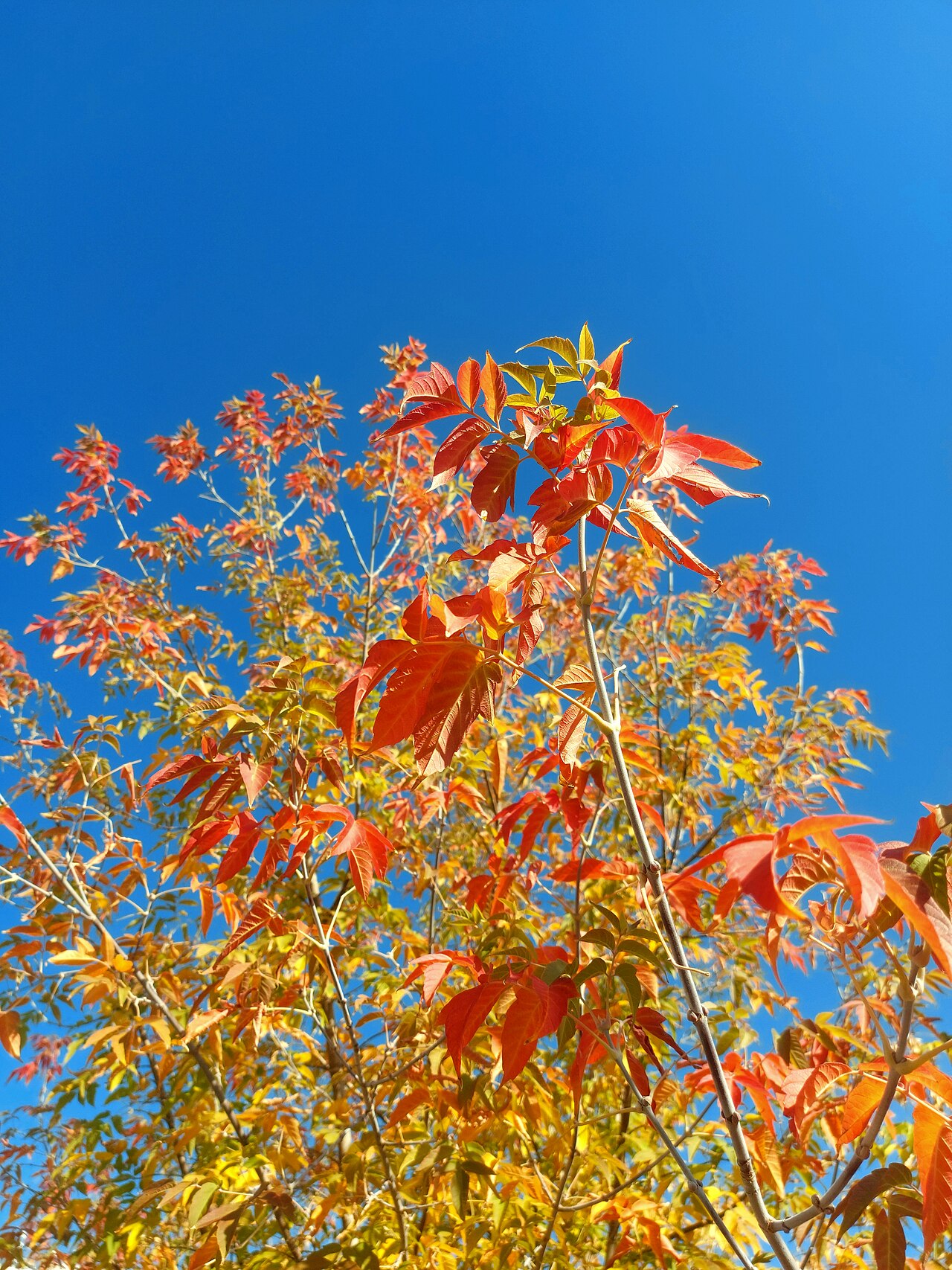
Chlorophyll gives leaves their green colour and participates in photosynthesis. In autumn, many deciduous trees lose chlorophyll, making yellow and orange pigments more visible. Some leaves also produce red and purple pigments. Autumn colour is therefore not simply a leaf freezing: it results from several processes taking place within the plant.
Why the yellow is hidden in summer
Carotenoids are already present in green leaves, but their colours are usually masked by abundant chlorophyll. As daylight becomes shorter, the tree prepares for the less favourable season, chlorophyll breaks down and its production slows. Yellow and orange become easier to see. Different species, and even individual trees, do not progress through this change identically.
Where the red colours come from
Red and purple colours are associated with anthocyanins. Unlike the carotenoids already present, these pigments can form in autumn as sugars accumulate in leaves. Light affects this process: leaves on a sunny side can sometimes look redder than shaded leaves on the same tree. Not every tree can produce the same intense red autumn display.
How weather affects the display
Sunny days followed by cool, non-freezing nights can favour bright colours. Severe drought can instead cause early leaf loss, while early frost, heavy rain and wind can shorten the display. Peak colour cannot reliably be promised for the same calendar date every year. Tree species, location and the season’s weather all matter.
Why individual shades differ
The final colour depends on the mix of pigments and the stage of leaf ageing. Birches often show yellow, while some maples produce reds and oranges; these are examples, not rules for every tree with a similar leaf. Brown colour alone does not necessarily mean disease. Identify a tree using leaf shape, arrangement, bark and fruit rather than colour alone.
A simple observation for your next walk
Choose one tree and photograph the same branch several times over two or three weeks. Record the date, whether the branch is sunny or shaded, and noticeable weather changes. Comparing one subject is more informative than random photographs of different species because it reveals a sequence. Examine fallen leaves without breaking branches. This small diary records local changes; it does not forecast the season across an entire region.
A general educational overview, not a substitute for professional guidance. Check current local rules and trusted primary sources before making consequential decisions.
Share this article