Identify the plant and the actual symptom
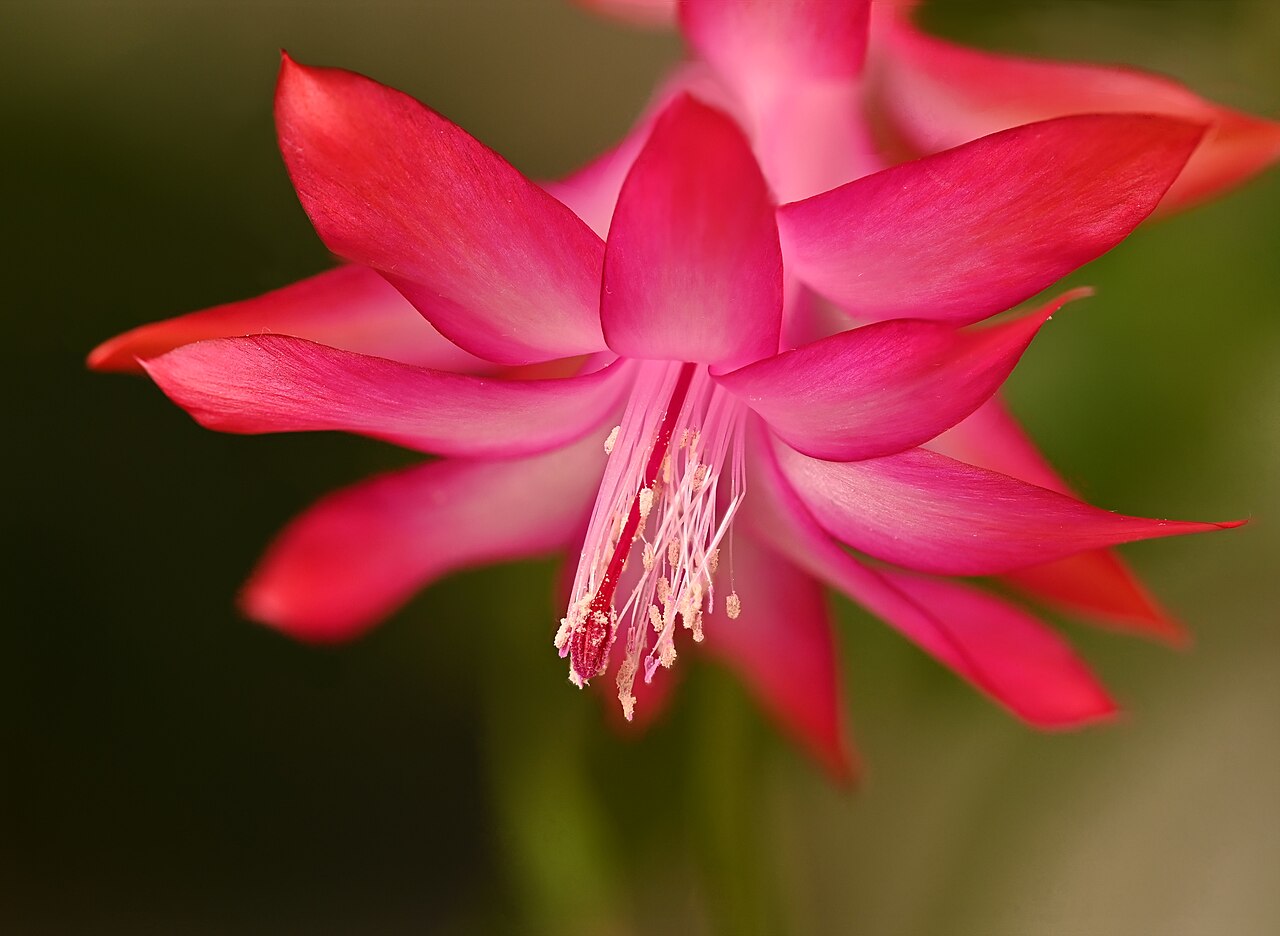
Several related plants are sold under holiday names. Thanksgiving cactus and Christmas hybrids do not necessarily flower together, while the similar Easter cactus normally flowers in spring. No open flowers on a particular November day does not by itself mean disease. Look closely at the ends of the stems: are buds absent, just developing, or already formed and falling off? Make that distinction before changing the care routine.
No buds: check lighting after dark
Long dark nights help trigger autumn bud formation. A nearby lamp left on late each evening can interrupt that signal. Provide bright indirect light during daytime and a consistent dark period overnight. Keeping the plant in a dark cupboard all day is not a substitute for a normal day and night cycle. University of Minnesota describes about six weeks of short days for winter-flowering types; one dark night cannot produce an immediate result.
A cooler autumn period helps preparation
RHS recommends cooler conditions of roughly 12–15°C for bud preparation and around 18–20°C during flowering. This is not advice to expose the plant to frost. Check the temperature where the pot actually stands: cold glass and a hot radiator can create conditions unlike the room average. Avoid trying to force a precise flowering date through sudden chilling. Variety, plant condition and earlier care all influence the eventual timing.
Buds form and then begin to fall
At this stage, aim for stable conditions. Cold exposure during transport, draughts and abrupt temperature changes can cause bud loss. Protect a purchase on the trip home and choose a settled position away from blasts of hot air. Check the compost: both excessive dryness and overwatering cause stress. Do not repot a healthy flowering plant merely to fit a prettier container. First address an identifiable change in its conditions.
Treat it as a forest cactus
Holiday cacti come from forest conditions and need different treatment from desert cacti. Check the compost before watering; excess water must escape rather than remain inside a decorative outer pot. Water needs decrease after flowering. If stems wilt while the compost stays wet, do not automatically add more water: inspect drainage and root condition. Dark, mushy roots can indicate rot, making recovery more important than trying to induce a flower display.
Make a simple plan for the next season
Record the plant’s position, when room lights go off and how quickly its compost dries. This helps you change an identifiable condition instead of trying several random remedies simultaneously. Extra fertiliser does not replace dark nights. Repot healthy plants only when needed, usually in spring after flowering, using a slightly larger container with drainage. If the preparation period has passed, maintain steady care; guaranteed holiday flowers within a week would be an unreliable promise.
A general educational overview, not a substitute for professional guidance. Check current local rules and trusted primary sources before making consequential decisions.
Share this article