Read the legend and contour interval
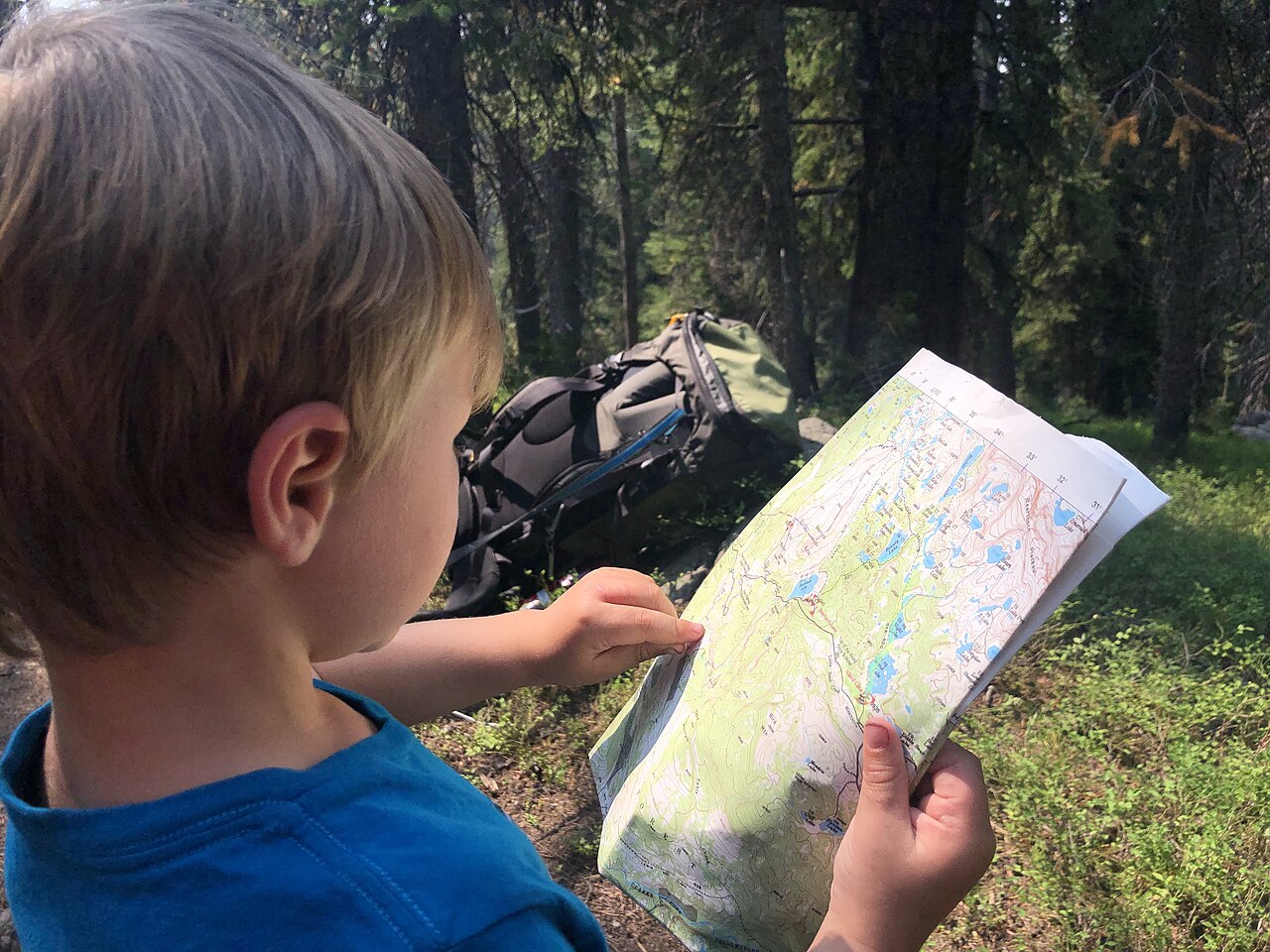
A contour joins points at the same elevation. Before interpreting the pattern, find the map's contour interval, units and scale. Do not assume every map uses the same spacing in metres. Select two labelled lines and count the intervening steps. This gives a grounded starting point instead of treating brown lines as decorative marks around a hill.
Compare spacing to understand slope
Closely packed contours indicate a steeper slope than widely spaced contours on the same map. Compare two possible routes between similar elevations and notice where the steep sections occur. Horizontal distance alone does not describe the effort required. A short path climbing tightly grouped lines may feel very different from a longer path following gentler ground.
Use several clues to recognise landforms
Closed contours often outline a hill, but depressions and other features need the legend and elevation labels to interpret correctly. Read streams, ridges and paths alongside the contour pattern. Avoid naming a valley from one curved line in isolation. Trace the surrounding terrain first and ask whether the pattern forms a consistent picture across the whole area.
Estimate ascent separately from distance
Follow the proposed route and mark where it climbs and descends. Repeated smaller climbs can add up even when the start and finish are at similar heights. Use map information or a route tool as an estimate, not a guarantee of walking time. Surface, weather, navigation difficulty and personal pace can all change how long the route takes.
Practise in familiar terrain first
Choose a short, permitted route with visible landmarks and compare the map with what you can see. Carry an accessible map and a backup navigation plan; a phone battery can fail. Turn back if visibility or terrain makes the route unclear. Learning contour patterns near home is more useful than first testing the skill on a remote steep hillside.
A general educational overview, not a substitute for professional guidance. Check current local rules and trusted primary sources before making consequential decisions.
Share this article