Start with the symptom pattern, not a self-diagnosis
Influenza often begins abruptly with fever or chills, cough, body aches, headache and fatigue. A common cold may develop more gradually with a runny nose and sore throat. COVID-19 can overlap with both, and some people with flu have no fever. These are tendencies, not reliable diagnostic rules. One child may have a different course from an older adult. Write down when symptoms started, which symptoms are worsening and whether there was contact with someone ill; those details help a clinician more than a guess based on the calendar.
Why a test can matter
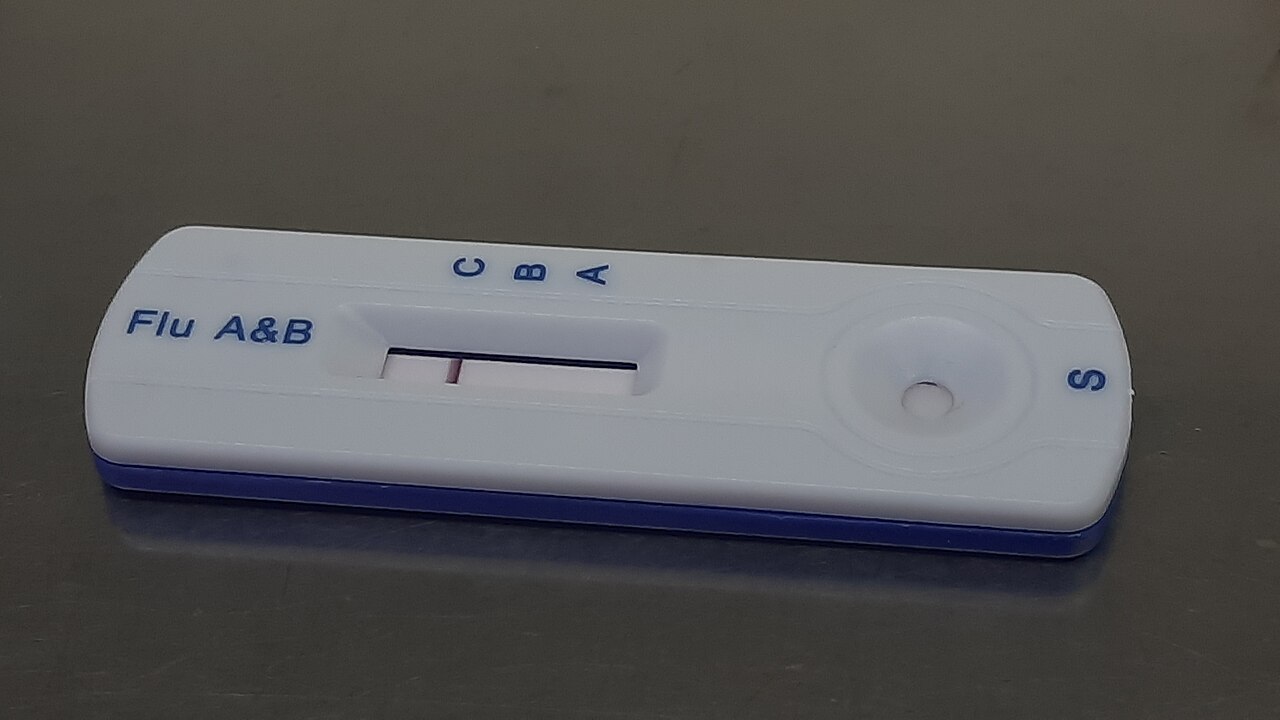
A rapid flu test may answer a specific question, but a negative result does not always exclude infection; accuracy depends on the test and timing. Some laboratory tests can detect flu and COVID-19 from a single specimen. A clinician may recommend testing when the result could change treatment, protect a high-risk person or clarify a difficult diagnosis. If you are pregnant, older, immunocompromised or have a major chronic illness, contact a medical professional early instead of waiting for home tests to become positive. The photograph for this article shows a real negative rapid influenza test, not evidence about any reader's symptoms.
What to do during the first days
Rest, drink enough fluids and avoid close contact while you are ill. Follow local public-health guidance about staying home and returning to normal activities. For fever or pain, ask a pharmacist or clinician which products are suitable for your age, conditions and other medicines; never guess doses for children. Antibiotics do not treat influenza or COVID-19 viruses. Prescription antivirals can help selected patients and work best when started early, so people at risk should contact a clinician promptly. Do not rely on herbal remedies, supplements or social-media claims as substitutes for evidence-based care.
Recognise emergency warning signs
Seek urgent medical attention for difficult or rapid breathing, persistent chest pain or pressure, confusion, seizures, signs of severe dehydration or difficulty waking the person. In children, blue or grey lips, ribs pulling in with breaths, poor responsiveness or a fever in a very young infant require prompt assessment. A fever or cough that improved and then worsens can also indicate a complication. These are examples, not an exhaustive checklist; if someone looks seriously unwell, contact local emergency services instead of waiting for a website to provide a diagnosis.
Protect people at higher risk
Complications such as pneumonia are more likely in some groups, including older adults, pregnant people, very young children and those with certain chronic conditions. Keep indoor spaces ventilated, clean hands, and consider well-fitting masks around vulnerable people when respiratory viruses are circulating. Ask a healthcare professional about recommended seasonal vaccinations and local eligibility. Latvia's SPKC reported increasing influenza activity in early November 2026, but that weekly surveillance figure does not predict whether an individual with a cough has flu.
A useful checklist for the doctor
Before the consultation, record symptom onset, highest measured temperature if available, breathing problems, current medications, relevant medical conditions and any test result with its date. Tell the clinician if a family member is at high risk. A positive test can guide the next step but does not remove the need to watch for warning signs; a negative test can be falsely reassuring. Use this guide for orientation, not a diagnosis or personalised treatment plan. If symptoms are severe or rapidly worsening, seek direct clinical care.
For health, poisoning or safety concerns, do not rely on this page to diagnose or assess an emergency. Contact qualified local services promptly when needed.
Share this article