| Observation | Possible explanation | Next step |
|---|---|---|
| Rapid clicks, dim dashboard | Insufficient starter power | Check battery and connections |
| One click | Starter, relay or circuit fault | Diagnose before replacing parts |
| Normal engine cranking | Fuel, ignition or control problem | Check fuel and warning messages |
| Engine dies after starting | Possible charging fault among other causes | Arrange professional diagnosis |
Make the situation safe first
This guide primarily concerns petrol and diesel cars with a conventional 12-volt starting system. If the car is in a dangerous location, prioritise people and roadside assistance. Do not warm an engine in an enclosed space; an open door does not make an attached garage safe from carbon monoxide. Note what happened during the last starting attempt. That observation is more useful for diagnosis than repeatedly trying again without a plan.
Slow cranking or repeated clicking
Sluggish rotation, rapid clicks and dashboard lights dimming noticeably can indicate insufficient power reaching the starter. A discharged or weakened battery is a common winter cause, but poor electrical connections can produce similar signs. A working radio does not prove there is enough power to start the engine. Switch off unnecessary loads before another attempt where the handbook allows. Respect the manufacturer’s cranking limits and pauses rather than keeping the starter engaged or repeating unchanged attempts.
One click, silence or normal cranking
A single click can accompany a starter, relay or circuit problem; it is not a complete diagnosis. With silence, check dashboard messages, key recognition and the starting conditions described in the handbook. If the engine rotates at its normal speed but does not fire, fuel supply, ignition or engine management may be involved. Check the fuel level. Buying a battery simply because the car will not start risks replacing the wrong component.
Why cold weather exposes a weak battery
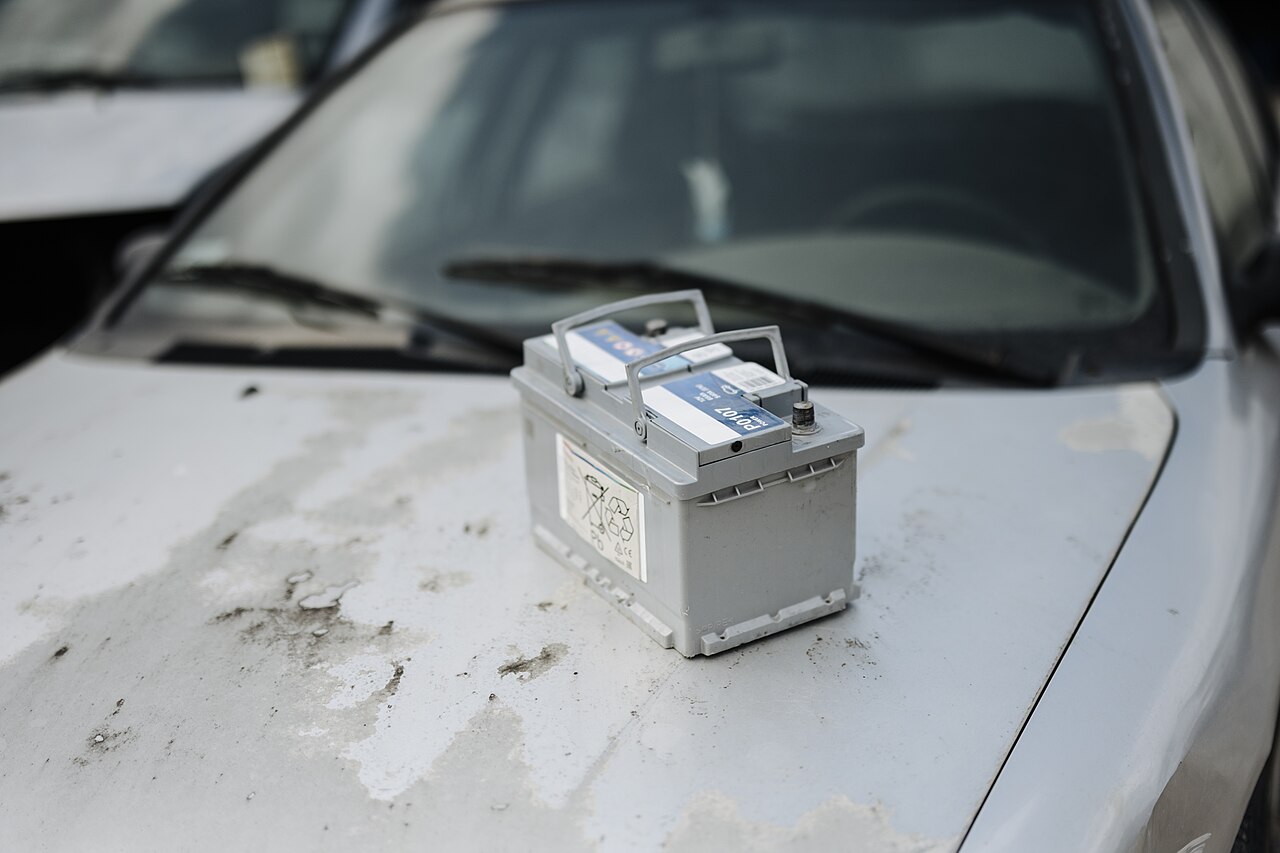
Cold slows electrochemical processes while starting the engine demands substantial current. Winter also brings lighting, heaters and fan use. Short journeys and long parking periods can leave the battery insufficiently charged. Charge level and battery health are separate questions: a discharged battery may still be serviceable, while a charged but deteriorated one may no longer start reliably. Ask for a battery and charging-system check, particularly if the trouble returns after a recent journey.
Before using jump leads or a booster
Read both the vehicle and booster instructions first: approved connection points and restrictions differ. Do not connect an external supply to a cracked or leaking battery; suspected damage warrants professional help. Never improvise polarity or assume any donor vehicle is suitable. Hybrids and electric vehicles have their own procedures, and their high-voltage systems are outside this guide. If unsure, use roadside assistance. A successful assisted start does not establish that the underlying fault has been fixed.
What to do after the engine starts
If the engine dies again or a charging warning remains, arrange diagnosis before continuing the journey. A short drive around the block is not a guarantee of a full recharge. For repeated short trips, a compatible charger used according to vehicle and battery instructions may help. Record the temperature, starting sound, messages and whether external power helped. These details help a technician distinguish battery trouble from a starter, charging or other fault.
A general educational overview, not a substitute for professional guidance. Check current local rules and trusted primary sources before making consequential decisions.
Share this article