| Observation | Check | Next step |
|---|---|---|
| Only one pan fails | Induction marking and magnetic base | Compare with compatible cookware |
| Small pan is not detected | Base diameter and central placement | Use a permitted cooking zone |
| Display on, no heating | Power setting, pause and lock | Follow the model’s instructions |
| Heat indicator remains after cooking | Its meaning in the manual | Keep clear of hot glass |
Why an active cooking zone may not heat
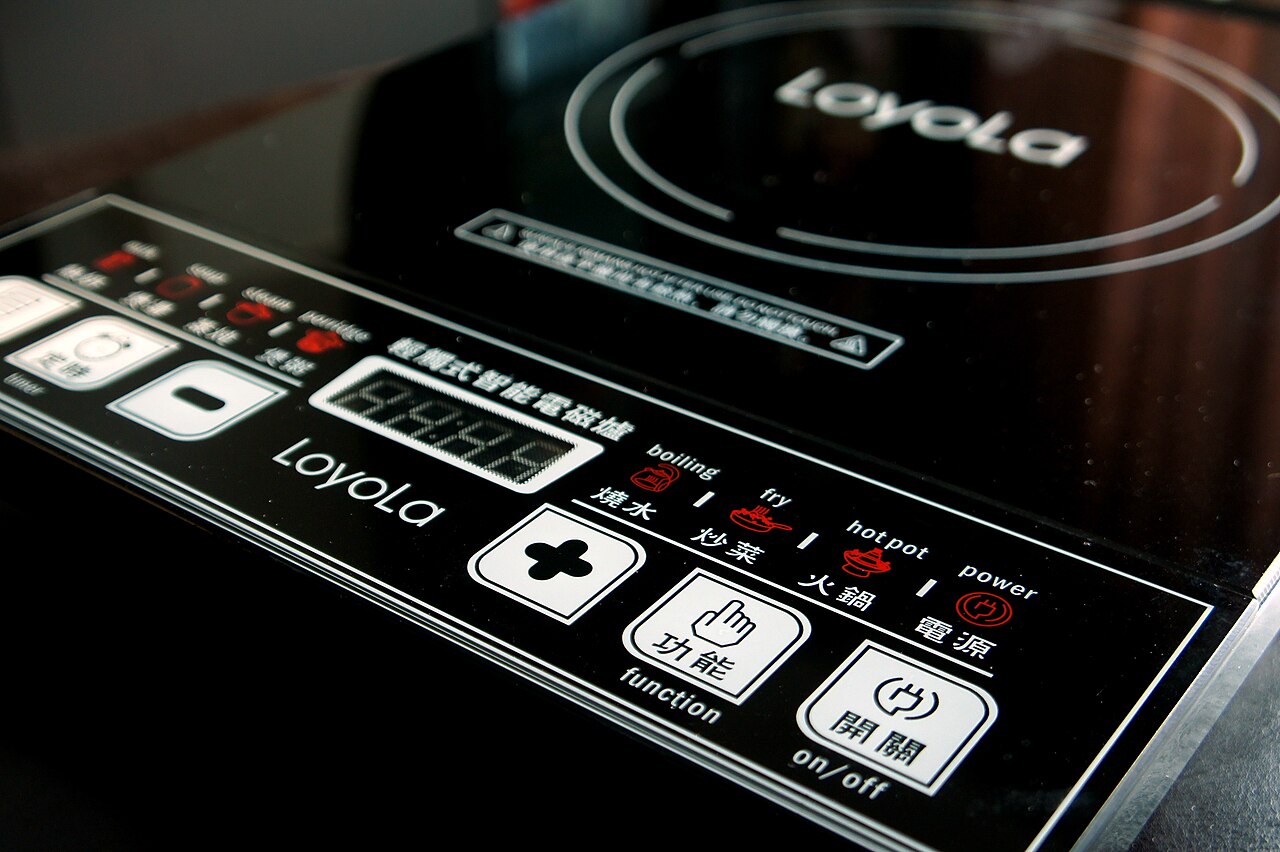
An induction hob creates an alternating magnetic field, producing heat directly in suitable cookware. A lit display therefore does not mean that every object placed on the glass will heat. Without a detected pan, an ordinary induction zone does not behave like a traditional electric element. A glass surface alone is not proof of induction either: other heating systems also sit beneath ceramic glass. Find the model and establish which type of zone you are checking.
Test the base with a magnet
Place a small magnet against the outside of the cold base, rather than the handle or lid. Attraction is a useful initial check for a magnetic base. Next, look for an induction compatibility symbol or the cookware manufacturer’s specification. The magnet alone does not establish whether the base meets your hob’s minimum diameter. Inspect its flatness and compare its size with the appliance instructions: a magnetic insert may cover only part of a wide pot.
Why the material name is not enough
Cast iron and suitable steel cookware often work, but not all stainless steel is magnetic. A stainless steel label therefore cannot replace checking the base. With enamelled cookware, consider the material beneath the coating rather than its appearance. For aluminium pans, look for an intentionally fitted induction-compatible base and the manufacturer’s marking. Lift heavy pots instead of dragging them across the glass, since rough cast iron can scratch it. Remove dirt from the base before placing it down.
Check a pan that is not detected
Centre a known compatible pan on a suitable zone. Check that you selected that zone and set a power level, with neither pause nor the control lock active. For a small base, try a smaller suitable zone according to the manual. If another pan works, the first pan may be the problem. If none works, record the error code and appliance model. A persistent fault calls for service rather than opening the appliance yourself.
The glass can still be hot
Hot cookware transfers heat back into the ceramic glass. Having no conventional glowing element does not make the surface safe to touch immediately after cooking. Watch the residual-heat indicator and consult your model’s manual for its meaning. It can remain on after a zone is switched off. Do not test the temperature with your hand. Residual heat is different from continued active heating, especially after a long cooking session with a heavy pan.
Avoid experiments when troubleshooting
Do not test heating with an empty pan, foil or metal cutlery lying on the glass. Do not place paper between the pan and hob to reproduce a video demonstration. The linked Bosch manual also prohibits adapter plates; do not buy one as a universal fix without checking your own model’s instructions. After cooking, switch the hob off using its controls rather than relying on pan detection. Stop using a cracked glass surface and arrange service.
A general educational overview, not a substitute for professional guidance. Check current local rules and trusted primary sources before making consequential decisions.
Share this article