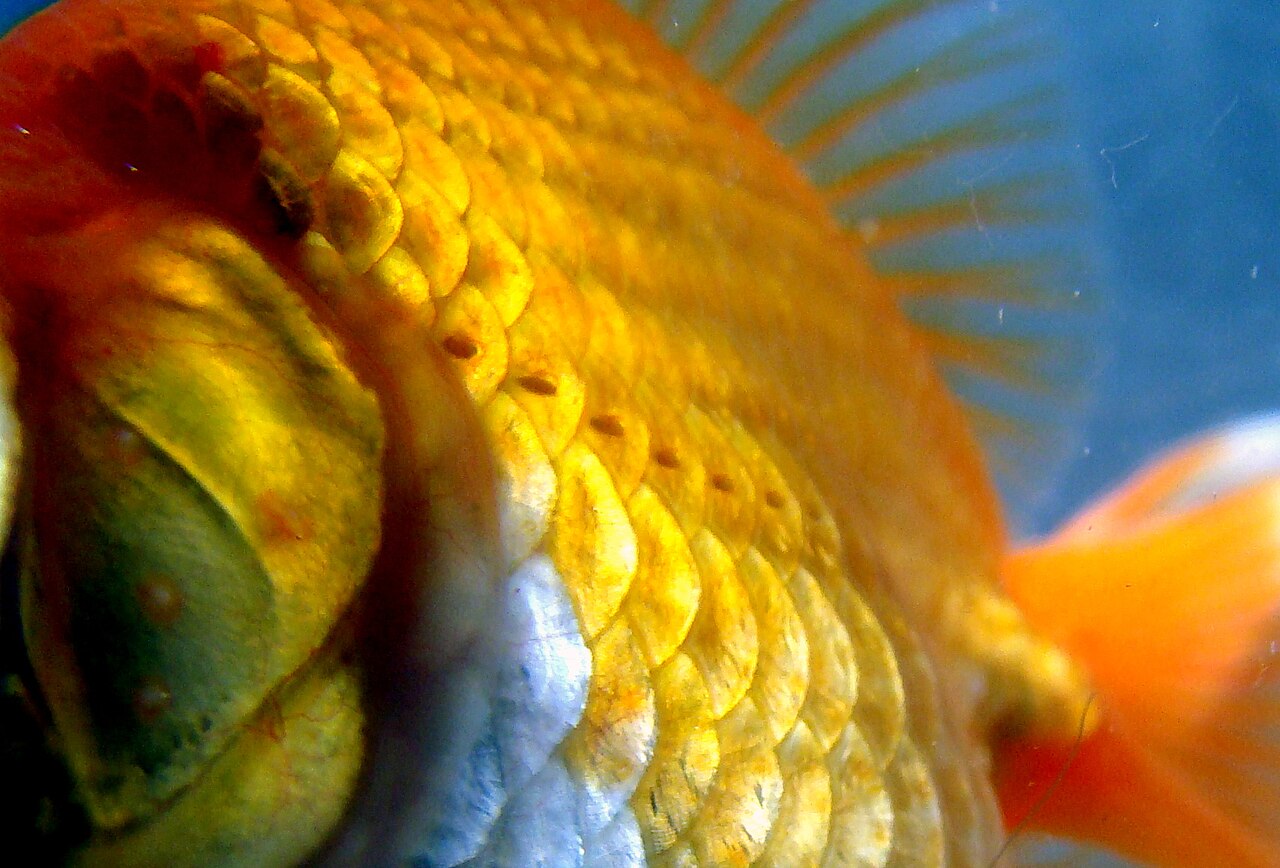
Locate the system along the body
Many fish have a visible line or series of pores along each side. This lateral-line system detects local water movements and vibrations. Its appearance varies among species, so an illustration is only a guide to the concept. On a photograph, distinguish the actual sensory line from a coloured stripe before deciding that you have found it.
Think of information carried by moving water
Water moves around swimming animals, obstacles and nearby disturbances. Sensory structures in the lateral-line system respond to that movement and help the fish gather information about its surroundings. This is not remote vision through all objects. The useful signal depends on the situation, and a busy or turbulent environment can be different from still water in a quiet pond.
Keep the senses separate
Fish also use other senses, including vision, smell and hearing, in ways that vary by species. The lateral line should not be described as their only way of detecting the world. A change in swimming behaviour does not identify which sense caused the response. Light, water clarity, current and the presence of other fish may all matter.
Observe without creating a disturbance
At a public aquarium or from a safe bank, watch how fish orient or move relative to each other. Record conditions and observations without tapping glass, throwing objects or disturbing the water. Compare several moments rather than trying to provoke a dramatic reaction. A quiet observation can raise useful questions even when you cannot isolate the exact sensory mechanism involved.
Use the idea carefully when reading advice
Claims that one vibration or lure must work for all fish oversimplify a varied sensory world. Treat anatomy as background knowledge, not a guarantee of a catch. If fishing, follow local rules and minimise disturbance. For identification, use species-specific references and real photographs; this explanatory illustration does not provide the detail needed to identify a fish from its lateral line alone.
A general educational overview, not a substitute for professional guidance. Check current local rules and trusted primary sources before making consequential decisions.
Share this article