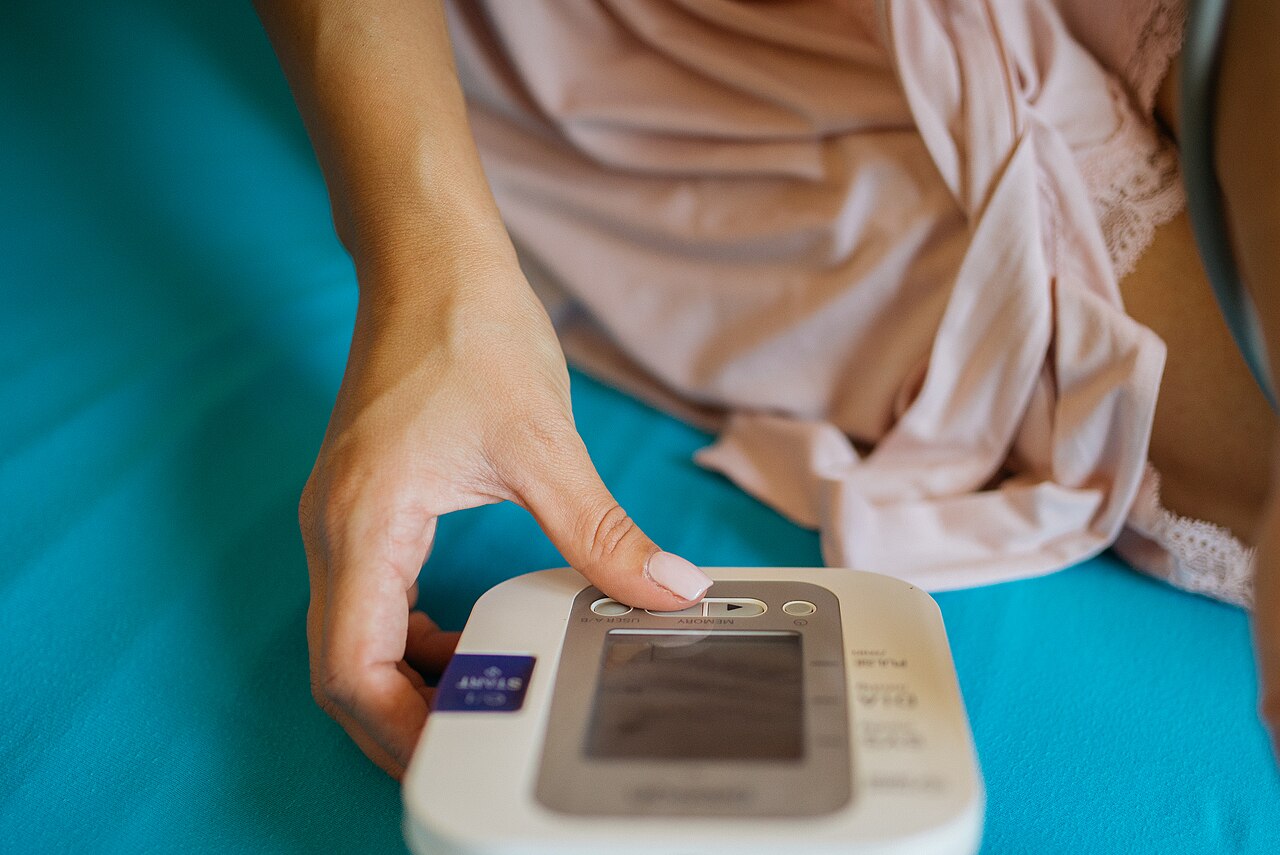
Choose the right monitor and cuff size
A validated automatic upper-arm monitor with a correctly sized cuff is generally preferred for home checks. Wrist and finger devices can be more sensitive to positioning; discuss what is suitable for you with a healthcare professional. A cuff that is too small or too large can distort readings. Check the manufacturer's arm-size range before buying or using it. Bring the monitor to an appointment so a clinician can show you positioning and compare measurements if necessary. Home results support clinical care but do not establish a diagnosis on their own.
Prepare for an accurate measurement
For at least thirty minutes beforehand, avoid smoking, caffeine and exercise. Empty your bladder and choose a quiet place. Sit with your back supported, feet flat and uncrossed on the floor, and rest quietly for at least five minutes. Do not talk, text, watch an upsetting video or rush to measure immediately after climbing stairs. Make the arm available without tight sleeves. Readings taken during panic, exertion or immediately after caffeine may be higher than your usual resting level and are less useful for routine monitoring.
Position the arm and cuff correctly
Wrap the cuff around bare upper-arm skin, not over clothing, using the position shown in the monitor instructions. Support the arm on a table so that the centre of the cuff is approximately at heart level. Relax the shoulder and keep the back supported and feet on the floor. Avoid clenching a fist, crossing legs or holding the arm in the air. Start the measurement and remain still and silent until the device finishes. If the display reports an error or the cuff is visibly slipping, correct the setup and repeat after a short rest instead of guessing the numbers.
Record two readings rather than one random number
Take two measurements at least one minute apart and record both with date, time and any relevant notes. When monitoring a known condition, use the schedule recommended by your clinician, ideally at comparable times of day. An unusually high number after stress or a low number with dizziness should be described in context. A diary or the monitor's memory is enough; you do not need a paid subscription to track values. Do not change or stop prescribed medicines based on a single home result without professional guidance.
When a high reading becomes urgent
The American Heart Association advises repeating a suddenly very high measurement above 180 systolic and/or 120 diastolic after waiting at least one minute. If the second reading remains this high, contact a healthcare professional promptly, even without symptoms. If it is accompanied by chest pain, shortness of breath, weakness, numbness, vision changes, difficulty speaking or other concerning new symptoms, call the local emergency service immediately. If someone has stroke or heart-attack symptoms, call for emergency care regardless of their measured pressure. Pregnancy requires separate clinical thresholds and advice.
What the numbers mean in practice
Blood pressure is written as two values: systolic when the heart contracts, and diastolic between beats, in millimetres of mercury. Categories vary between professional guidelines and health systems, and one isolated reading cannot capture long-term trends. Ask a clinician what goal applies to your age, medical history, pregnancy status and treatment. Keep a clear log for appointments, especially when medication is being assessed. Regular home checks are useful only when the technique is consistent and the results inform an appropriate discussion with healthcare professionals.
For health, poisoning or safety concerns, do not rely on this page to diagnose or assess an emergency. Contact qualified local services promptly when needed.
Share this article